

Driving Change in Tech 2026
The Women in Digital Annual Report
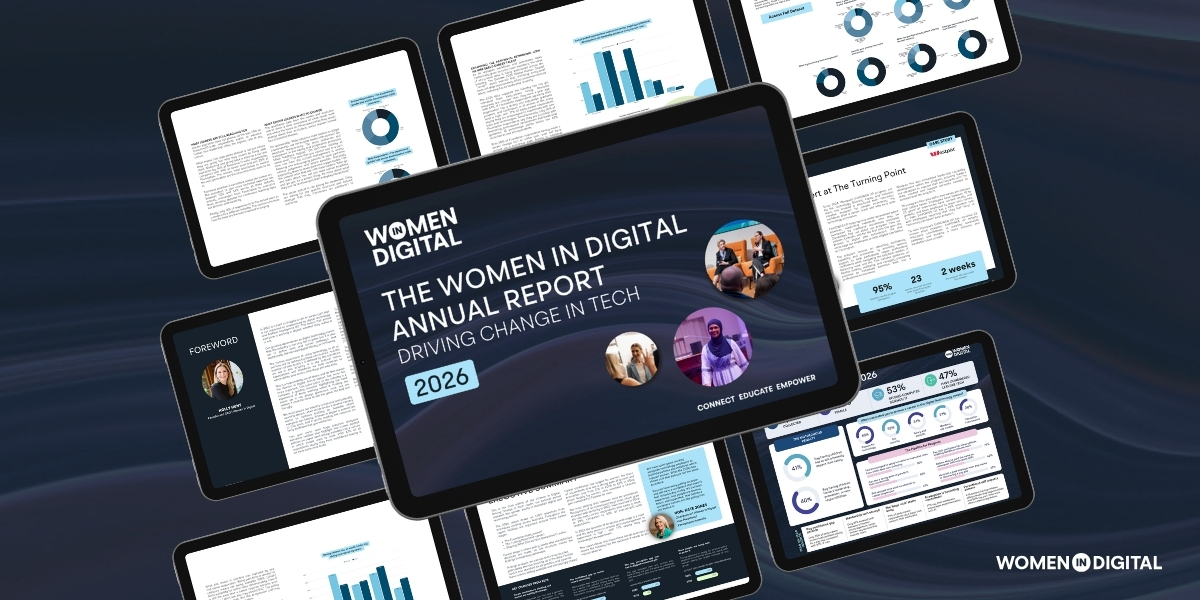
The 2026 Women in Digital Annual Report is now available!
Australia’s largest annual study of gender equity in digital and technology, now in its third edition.
The gender equity conversation in Australian tech does not stand still, and neither does this report. Driving Change in Tech 2026 is Women in Digital’s third national study into the lived experience of digital and technology professionals across the country, built on 1,029 responses from every career stage and every state and territory.
This year we’ve renamed our three lenses to track people through their whole career arc, from first job to the C-suite:
The Foundation Early career, entry level, interns, graduates and anyone new to digital and tech. This is where first impressions of workplace culture are formed, and where confidence is high but retention risk is already showing.
The Turning Point Mid-career and senior-level professionals. This is where flexible work becomes the norm on paper, but where pay transparency, part-time work and parenthood start to quietly reshape who gets ahead.
Shaping What Comes Next Directors, VPs, executives and C-suite leaders holding structural power. This is where the view is most optimistic, and where the gap between what leaders see and what everyone else experiences is most exposed.
Bringing together open data, industry commentary, and firsthand accounts from women in the field, the 2026 Women in Digital Annual Report is an essential resource for business leaders, HR professionals, policymakers, and anyone committed to creating a fairer, more equitable digital future.
Note: The data presented in this Annual Report was collected from our community in Australia through comprehensive surveys. These surveys included a mix of qualitative and quantitative questions, enabling us to gather both measurable data and detailed feedback, providing a well-rounded understanding of the insights and experiences of the tech industry.
Download the Annual Report
Breaking down the numbers by career stage
The Foundation
77% of early-career respondents say they’re encouraged to experiment with new tools and technologies, including AI, the strongest result of any workplace statement in this cohort. But 57% have considered leaving tech, and 55% have experienced gender bias or discrimination in job interviews. Most striking: it’s now early-career respondents, not senior leaders, most likely to say an entrenched “boys’ club” exists in their workplace, a reversal of 2025’s pattern.
The Turning Point
Flexible work is now the baseline, with 76% saying their workplace offers flexibility that meets their needs. But 34% agree that working flexibly hurts their chances of promotion, and 41% believe having children would adversely affect their leadership opportunities. On pay, the gap is stark: 75% of men believe they receive similar pay rises to colleagues, compared with 61% of women in the same career stage.
Shaping What Comes Next
72% of executive and C-suite respondents believe their workplace ensures equal opportunity to progress, but that confidence splits sharply by gender: 76% of men agree, compared with 57% of women at the same level. One senior respondent told us plainly: “I am the most senior female within the organisation, which means I have no-one else to look up to from that perspective.”
What’s changed since 2025?
Some of the biggest movement in three years of this report happened this year, and most of it is heading in the right direction.
Career confidence is climbing.
62% of respondents can now see a strong path of growth and promotion in their current role, up from 51% in 2025, with women recording the strongest gain of any group.
The pay perception gap just had its biggest turnaround yet.
The gap between men and women who believe they’re paid the same as colleagues with equivalent skills narrowed from 18% to 8% this year.
The confidence gap on senior roles is closing.
The gap between women and men who feel ready to put their hand up for a senior role narrowed from 15% to 10%.
More people are being told to go for it.
Encouragement to apply for internal senior roles rose from 44% to 55%, with women seeing the largest increase of any group.
Why This Matters
Digital has stopped being a separate sector. It’s the operating system for every industry now, and almost everyone is already working in digital, whether they realise it or not. That makes the question of who builds our technology, and the conditions we set for them, a whole-of-industry responsibility.
The stakes are commercial as well as cultural. Research cited in this year’s report found that 51% of Australian workers already lack at least one digital skill required for their role, with AI capability gaps among the most common. At the same time, 77% of respondents this year said their workplace encourages them to experiment with AI, one of the strongest results in the entire dataset. Access is growing. What the 2026 data shows is that access alone isn’t enough: without deliberate attention, the same biases that show up in hiring and promotion show up in who gets to build with AI, too.
Closing the gap isn’t just good for equity. It’s how Australia builds the technical talent base it needs to keep growing.
2025 Annual Discourse
A lot has changed since we published our 2025 Women in Digital Annual Report. That report sparked critical conversations around workplace equity, culture, and inclusion. It laid the foundation for the data-driven approach we’ve continued and expanded in this year’s report.
If you’re interested in tracking progress or exploring how far we’ve come, you can download last year’s edition below.