

digital-trends-panel.jpg

November 25, 2025 Women in Digital

Stepping into change: Are we really afraid of change, or are we just afraid of uncertainty?


As organisations across Australia navigate rapid shifts in technology, workforce capability and community expectations, what will 2026 look like across the digital and tech industry? It’s not just that transformation is accelerating; it’s that leaders are being forced to rethink long-held assumptions about how work gets done, how talent grows, and what people actually should be doing in a modern, AI-enabled environment.

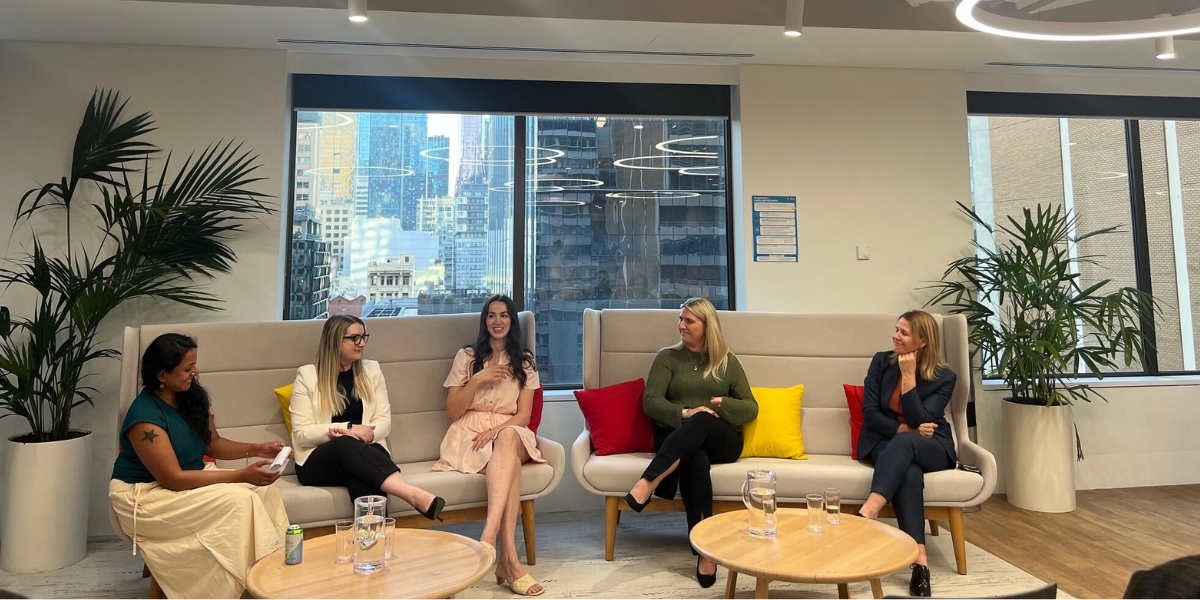
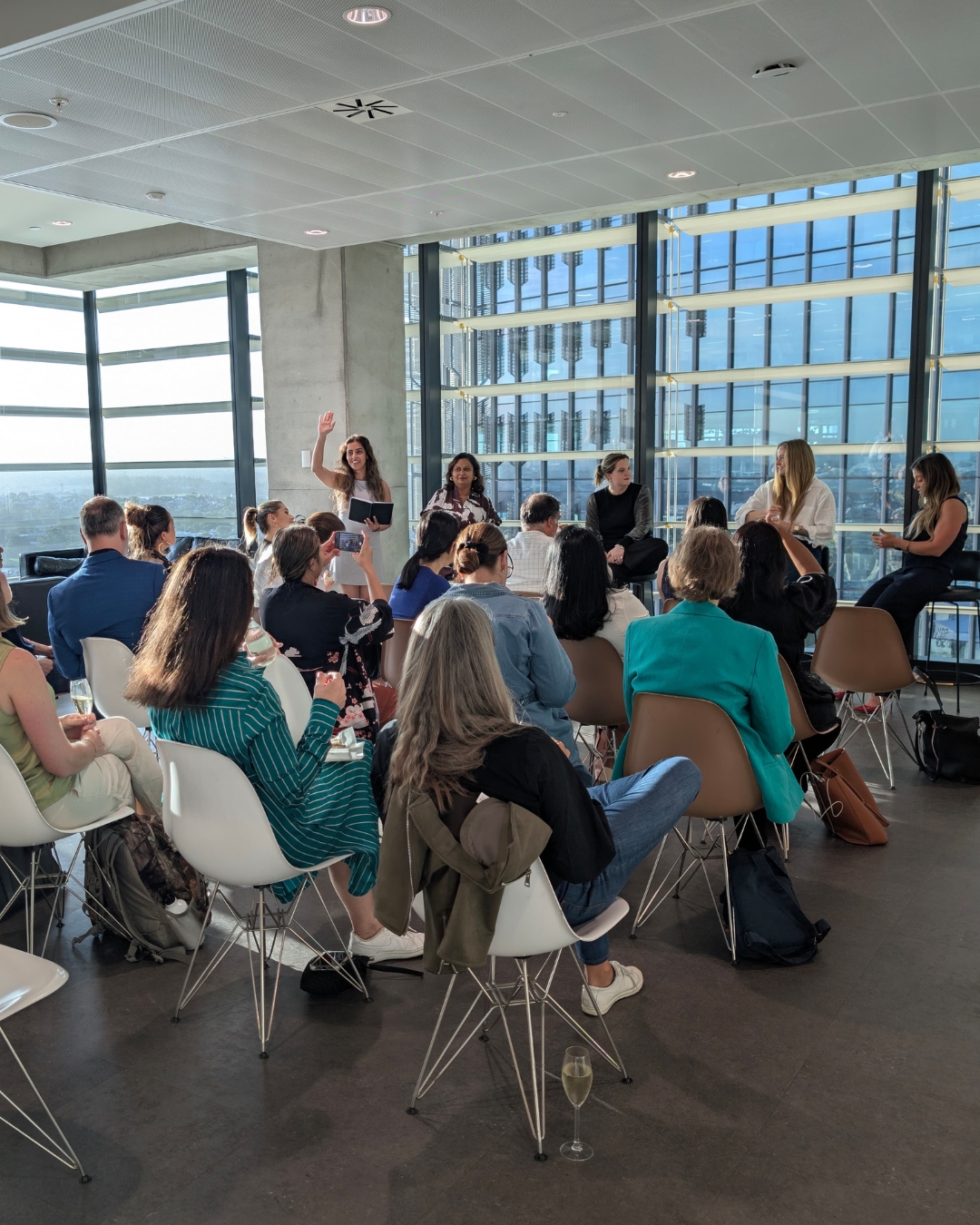
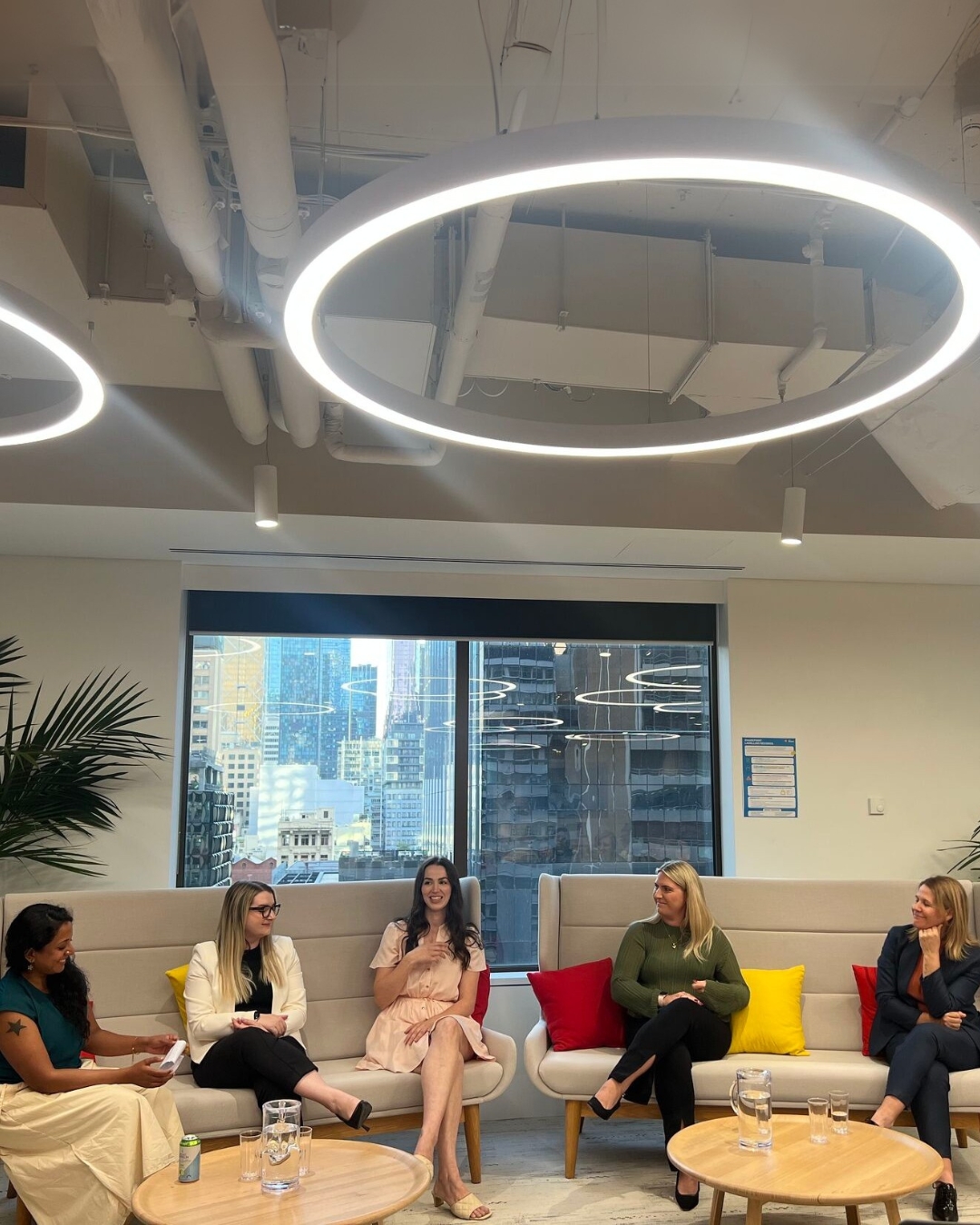
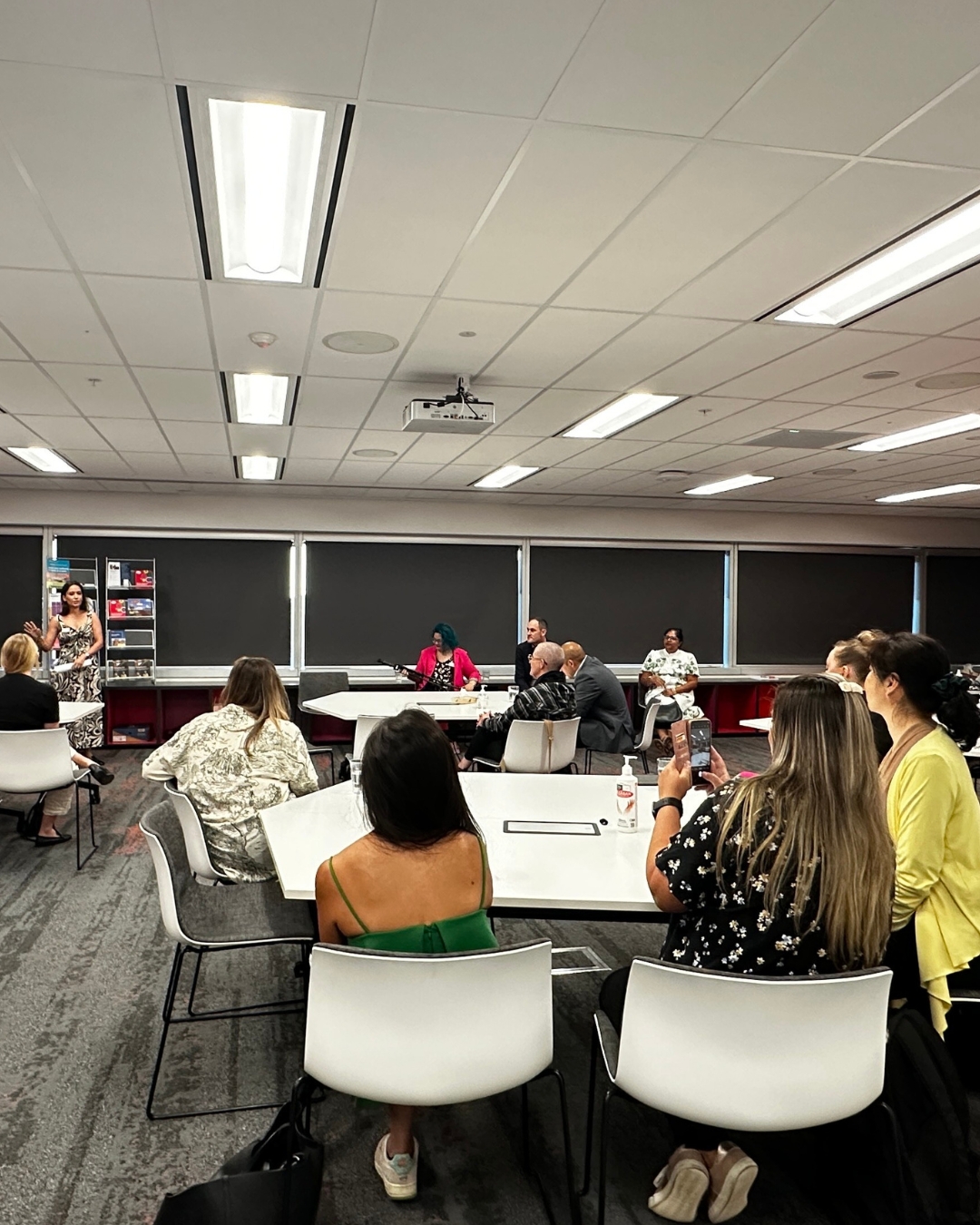
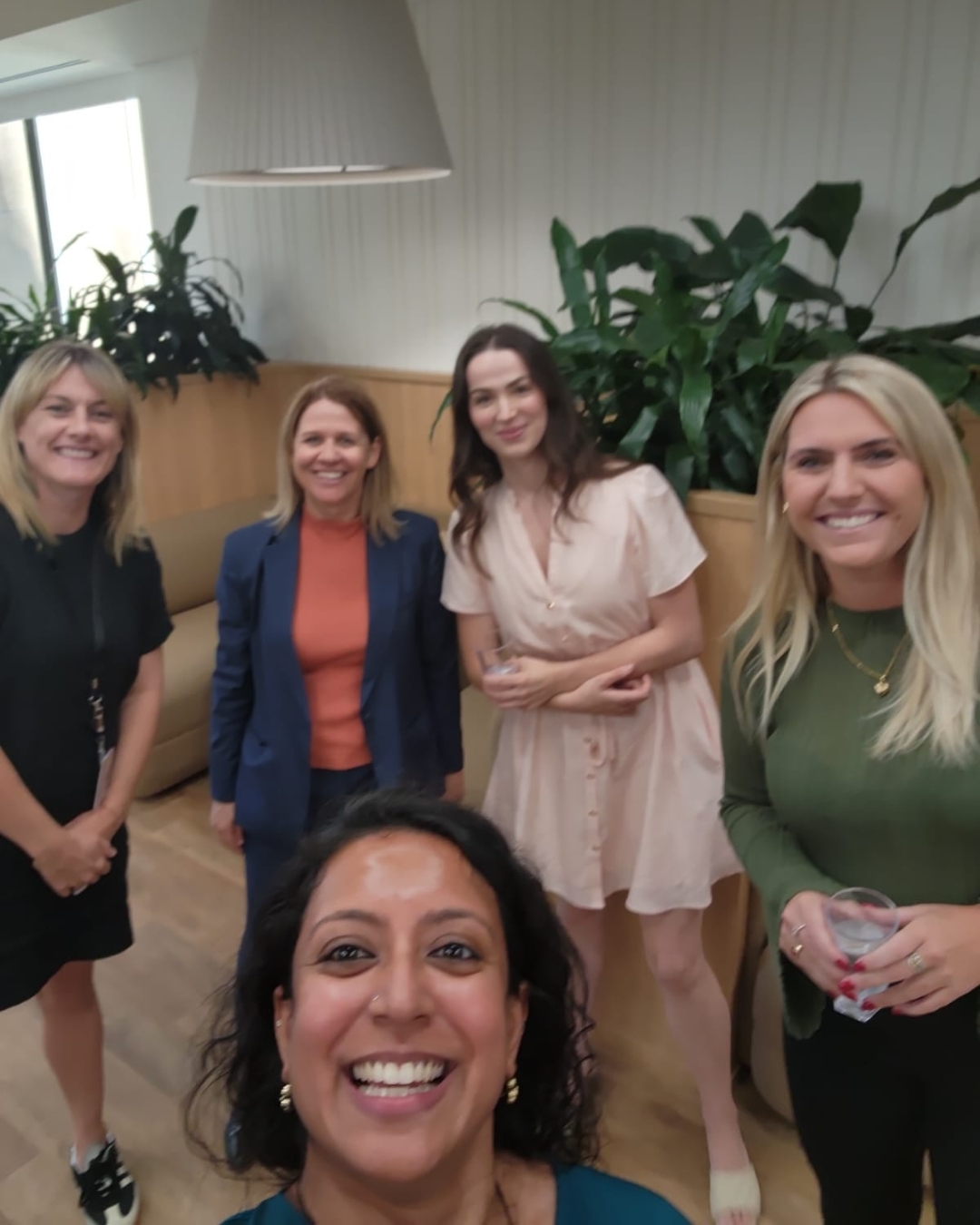
In our recent online panel discussion, Lucy Poole, Carrie Mott and Elyse Philippi, moderated by Adelaide Haynes, explored how these forces are reshaping the way organisations design roles, develop skills, and build cultures of adaptability. Their insights painted a picture of a sector standing at a crossroads: move forward with curiosity, co-creation and experimentation – or fall back into outdated models that no longer serve the work or the people doing it.

Talent, pipelines and new workforce models

One of the key vantage points came from Lucy, who emphasised how the public service is rethinking talent pipelines. Lucy cited a shortfall of jobs across core government projects, provoking a call to reshape how talent is sourced, developed and deployed. Rather than simply filling roles in the old model, the focus is shifting to building digital literacy into various pathways (not just a single “IT job” lane), re-shaping existing workforce capability and diversifying talent pools.

The buzzwords she urged: ideation and experimentation, meaning that organisations need places where new ways of working can be trialled, not just deployed wholesale. On the people side, she stressed the importance of humility and a mindset that new tech and AI won’t be a plug-and-play “silver bullet”. Teams must be ready for change, not expect it to magically arrive and fix everything.

In short: The talent question is no longer “can we hire enough people?” but “can we design the pipelines, the pathways and the mindsets so that people are ready to engage with the future?

From search to conversation 

Carrie took us into how the nature of discovery, engagement and interaction is changing. The shift is away from “search” (in the old sense of typing keywords and sifting through ranked results) to conversation… interactive, dynamic, contextualised. She also emphasised co-creation as a key buzzword: rather than organisations dictating top-down what is needed, the future lies in working with people (users, teams, communities) in the design of solutions.

On the skills front, she highlighted the ability to interrogate information, in a world awash with data, AI-assisted answers and “surface” insights, the ability to ask good questions, challenge assumptions and dig deeper becomes critical.

Her message: The digital shift isn’t just about new tools. It’s about new forms of interaction and meaning-making, which means our design, our workforce, and our culture must evolve accordingly.

Asking a different question: What should humans never have had to do?

Elyse offered a provocative pivot: instead of asking “How do we keep people working harder?” she asked, “What should humans never have had to do?

At this moment of “permission” for innovation, she said organisations are not simply managing capacity or asking people to work longer hours. Instead, they are free to ask: What tasks should we remove so human energy can be freed for more meaningful work?

Her buzzword: Outcome over Output, meaning that we focus less on “how much people do” and more on “what we achieve together”. On mindset, she stressed curiosity with a touch of humility, and treating failure as an opportunity to learn (rather than a setback to bury). When you free people from work that machines or automation should handle, what becomes possible? She invited us to imagine it.

This is a powerful reframing: not just “how do we do more” but “how do we do differently”.

Bringing it together: Themes, mindsets & moving forward

Across the contributions, some shared themes emerged:

  • Mindset matters: Lucy emphasised humility and readiness; Elyse emphasised curiosity; Carrie emphasised interrogation of information. These are skills of the future alongside technical skills.
  • Talent + pathways + experimentation: We are not simply hiring more of the same. We are redesigning how work gets done, who does it and with what skills.
  • From output to outcome: The value shifts from doing more to doing better, and doing different.
  • Co-creation & conversation: Engagement with stakeholders, end-users and teams becomes less about “here’s what we built for you” and more about “let’s build together”.
  • Ideation & experimentation: Lucy’s call to build experimentation into the model means organisations must carve out space for trying, failing, learning, rather than only executing on fully formed projects.
  • Facing uncertainty: If the fear is less about change per se than uncertainty, then the work becomes about building adaptive capacity, flexibility, and psychological safety.

Final Thoughts

We often say, “Change is inevitable.” But what this panel suggests is that what matters more is how we respond to it, and whether we use this moment to deliberately redesign our systems, our workforce and our mindsets — rather than simply reacting.

As Lucy, Carrie and Elyse all emphasised: the time is now for ideation, experimentation, redesigning talent pipelines, shifting to conversation-based engagement, and focusing on outcome over output. In doing so, organisations don’t just keep pace with change; they shape it.


Are you a WID member? Log in to the Member Portal to watch the full recording!

Aus-AI-Opportunities.jpg

November 18, 2025 Women in Digital

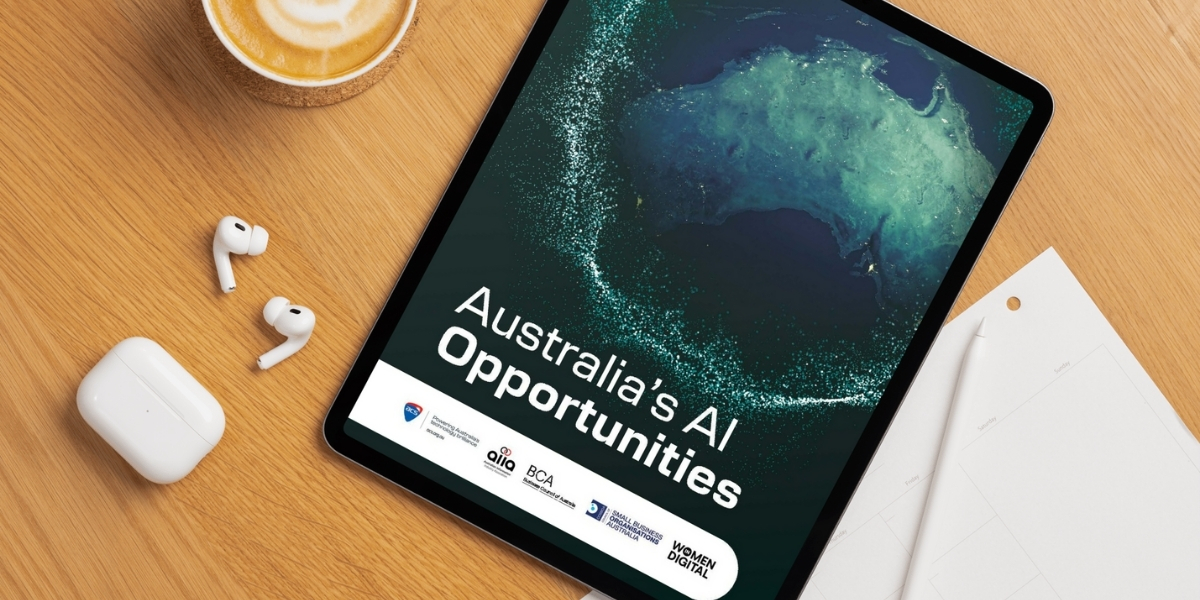
Artificial intelligence is rapidly reshaping industries around the world, and Australia stands at a pivotal moment. The Australia’s AI Opportunities report, released in partnership with ACS, AIIA, the Business Council of Australia, Small Business Organisations Australia, and Women in Digital, explores how Australia can harness AI to drive innovation, boost productivity, and strengthen its global competitiveness.

As AI adoption accelerates, this report highlights both the opportunities and the essential steps needed to ensure Australia is prepared for an increasingly AI-enabled future.

Why AI Matters for Australia’s Future

AI is already transforming sectors such as healthcare, education, cybersecurity, energy, and professional services. For Australia, embracing AI presents a significant opportunity to:

  • Boost national productivity by automating routine tasks and improving decision-making.
  • Create new, high-skill jobs across the technology, digital, and emerging innovation sectors.
  • Support small and medium businesses to compete globally through AI-powered tools and insights.
  • Strengthen Australia’s digital economy and position the nation as a leader in responsible and ethical AI.

The report outlines clear recommendations for industry, government, and education providers to build the infrastructure, workforce skills, and regulatory foundations needed to unlock this potential.

Key Themes from the Report

The Australia’s AI Opportunities report explores:

  • The economic impact of AI: How AI-driven productivity could deliver substantial growth across Australian industries.
  • Workforce capability and skills: The increasing demand for AI literacy, digital skills, and continuous learning across all professions.
  • Responsible and ethical AI: Why transparent governance, trust, and safety must underpin Australia’s approach to AI adoption.
  • Business and sector readiness: The opportunities and challenges faced by enterprises, SMBs, and startups in implementing AI solutions.
  • National collaboration: The importance of bringing together industry, government, academia, and community organisations to create a unified AI strategy.

A Collaborative, National Approach

This report reflects a shared commitment across Australia’s leading technology and business organisations to support a future where AI drives inclusive, sustainable, and long-term economic growth. By working together to build a digitally confident workforce, empower businesses with AI capability, and embed ethical frameworks, Australia can fully realise the transformative power of artificial intelligence.

Access the Full Report

For leaders, policymakers, business owners, and digital professionals wanting to understand the opportunities ahead, and what’s required to seize them, this report is essential reading.


Download Report


AI-in-Action-Recap.jpg

April 8, 2025 Women in Digital

AI in Action Recap

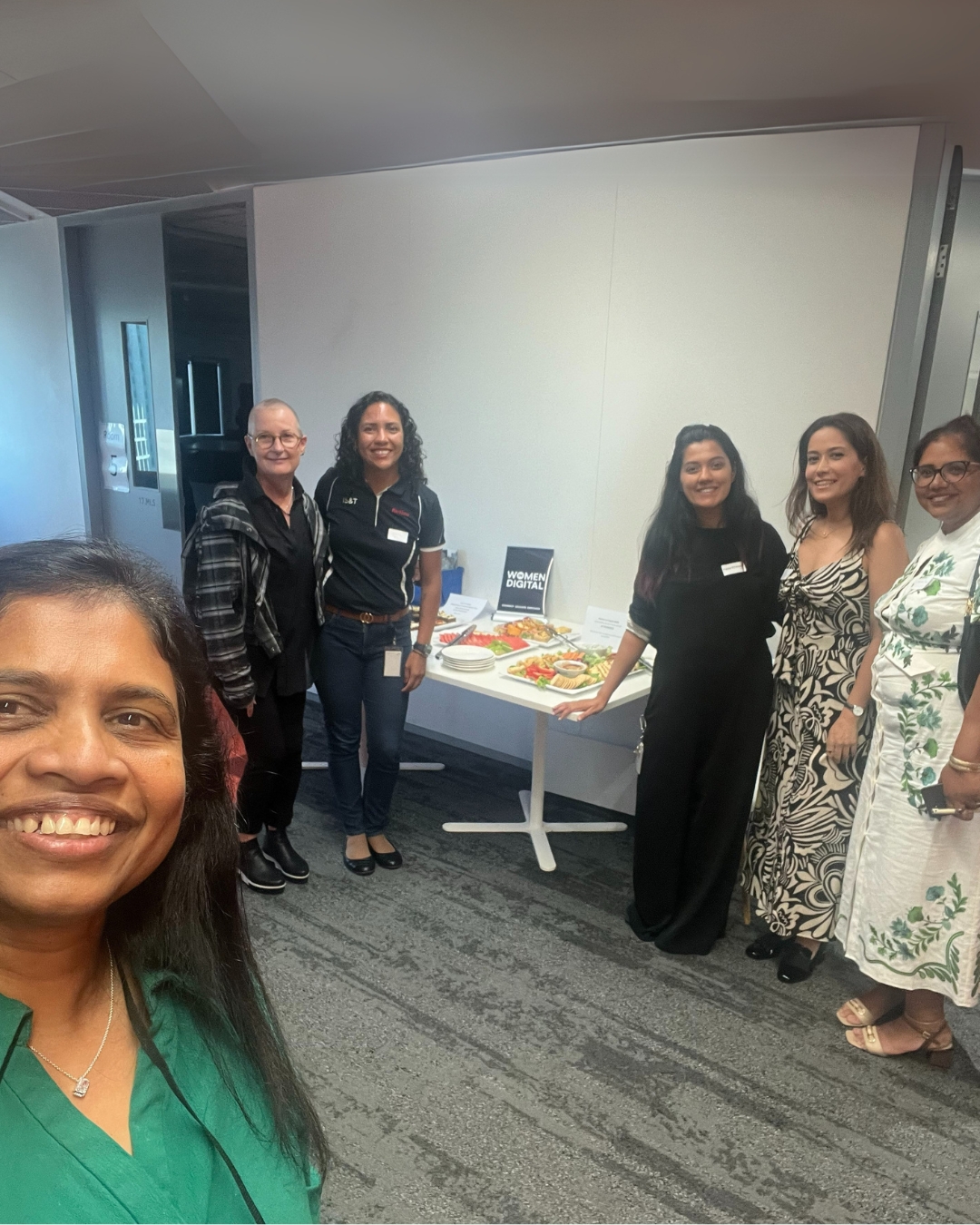
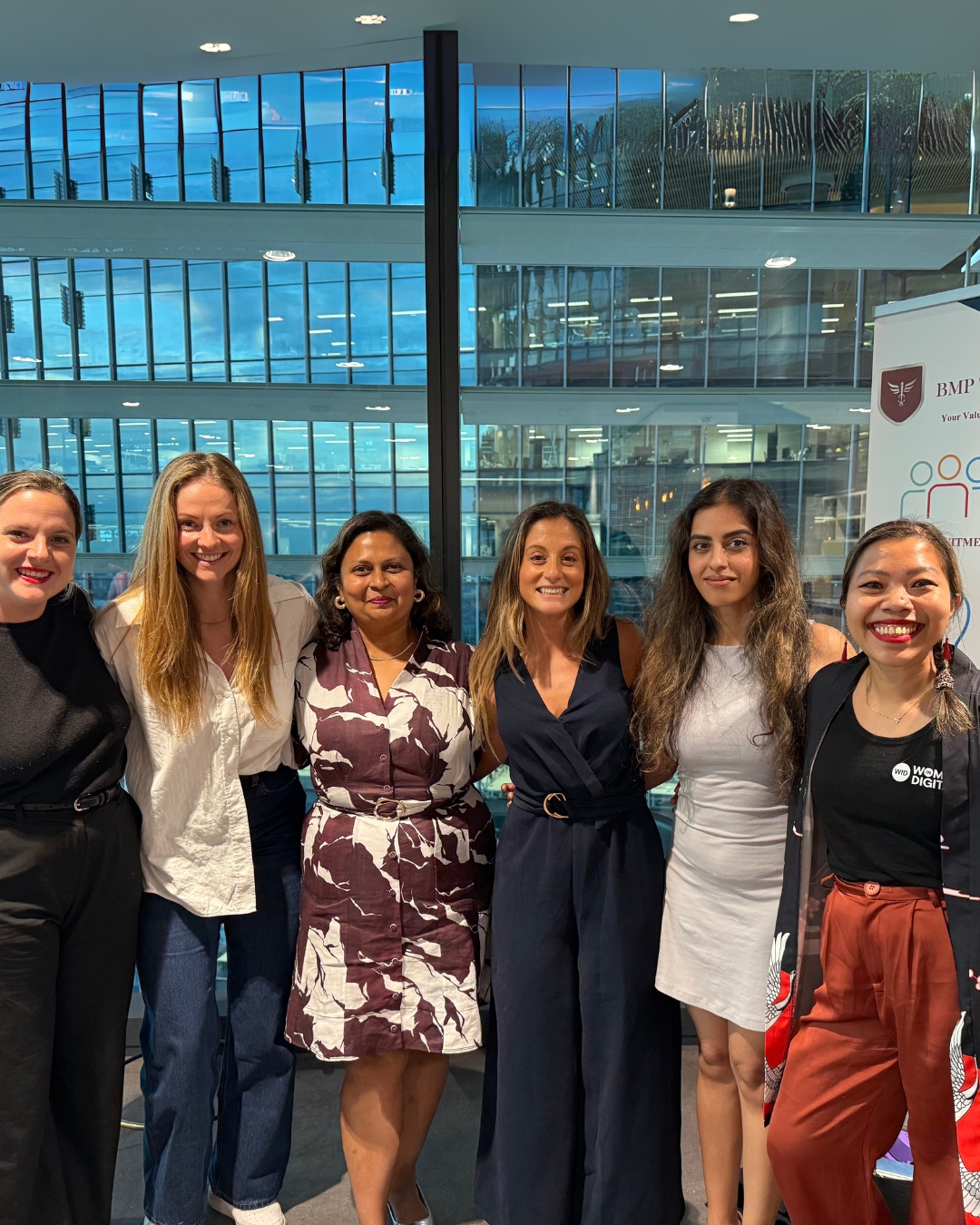
On March 19, industry leaders and AI enthusiasts gathered in Sydney, Melbourne, and Perth for an insightful discussion on how AI is reshaping the way we work and live. This panel event brought together experts from diverse industries to share their experiences, challenges, and strategies for using AI effectively and responsibly.

Special thanks must go to our hosts, BMP Technologies (Sydney), Shell Energy (Melbourne) and Rio Tinto (Perth).

The evening was filled with thought-provoking conversations, personal insights, and unforgettable one-liners. The event provided a balanced view of AI’s potential, highlighting its opportunities and challenges.

Key Takeaways from the Panel

  • AI isn’t a magic fix, it’s a tool. The real power lies in how we use AI, not in the technology itself. Leaders must be intentional in leveraging AI to enhance productivity and decision-making rather than replacing human expertise.
  • Ethical AI matters. One of the biggest risks with AI adoption is blindly trusting its outputs. The panelists across Sydney, Melbourne and Victoria all stressed the importance of questioning data, monitoring AI-generated decisions, and implementing guardrails to prevent bias and unintended consequences.
  • AI is most valuable in consumption, not just development. Many of AI’s best applications come from how we use it in day-to-day life, from automating repetitive tasks to enhancing creativity and strategic thinking.
    Career mobility in AI is growing. A major discussion point across all three events was how professionals, especially those without a technical background, can transition into AI-related roles. Curiosity and a willingness to learn are key drivers for career growth in this space.
  • Leaders need better AI education. There is still a significant gap in understanding AI’s capabilities at the leadership level. Decision-makers must invest in proper AI education to ensure responsible and effective adoption.

Tools to Consider

During the events, several AI-powered tools were discussed that are making a real impact across industries:

  • ChatGPT & Claude – For content generation, brainstorming, and idea refinement.
  • MidJourney & DALL·E – AI-powered design and image creation tools.
  • Notion AI & Grammarly – Enhancing writing, summarization, and organization.
  • Synthesia & ElevenLabs – AI-generated video and voice solutions.
  • AI-powered automation tools (Zapier, Make) – Helping teams streamline workflows.

One unexpected game-changer? AI can categorise and summarise handwritten notes – even post-its!

The Bias Challenge: AI and Representation

A crucial topic of discussion was bias in AI. Many AI systems inherit biases due to historically male-dominated data sets, which can lead to skewed outcomes and reinforce existing inequalities. The panel highlighted why diverse teams are essential in AI development – to clean data, question biases, and ensure inclusive decision-making.

AI presents a net gain of opportunities, but only if we intentionally include women and underrepresented groups in its development. Without diverse perspectives, we risk perpetuating inequalities rather than solving them.
The call to action? Put the customer at the centre of AI use cases. Ensure that AI aligns with business objectives, ethics, and, most importantly, human needs.

Final Thoughts

The discussions were dynamic, the energy was high, and the takeaways were invaluable. AI is not just shaping the future of work… It’s already here, and how we engage with it will define the next decade.

A huge thank you to our incredible panelists:

Melbourne, powered by Shell Energy

  • Jessica Dawson (NAB)
  • Kimberley Morrison (Aurecon)
  • Daniela Paino (Shell Energy)
  • Amanda Bennie (HESTA)
  • And our MC And WID Ambassador Vinojini Nair (GHD)

Sydney, hosted by BMP Technologies

  • Sushma Murthy (MedConnect AI)
  • Laura Brock (Crowdstrike)
  • Sam Garven (Hello Canopy)
  • And our MC and WID Ambassador Stevie-Ann Dovico (Beyond Bank)

Perth, powered by Rio Tinto

  • Leon Burgin (Woodside Energy)
  • Dr. Rachna Dhand (Rio Tinto)
  • Ming Johanson (Marketing Jumpstart)
  • And our MC and WID Ambassador Nadia Reyhani (Trust AI)

And, of course, to everyone who attended and contributed to the conversation! Stay curious, question everything, and remember: AI is only as good as the people using it.


60
61
62
63
64
65
66
67
68

kevin-ku-w7ZyuGYNpRQ-unsplash.jpg

January 19, 2018 Women in Digital

By Jeannine Meyer

If you are currently active in the field of artificial intelligence (AI) or have a hankering to explore and understand the depths of machine learning, then you have most probably heard of recent PhD graduate and co-founder of Brisbane’s own AI meetup, Natalie Rens. What is even more intriguing is how this South African born ballet dancer turned neuroscience extraordinaire came to be one of Australia’s most up and coming AI experts.

Upon entering university life, Natalie first saw herself as an adventurer who would take a trip to the Amazon, discover unknown exotic plants and ultimately create brand new pharmaceuticals out of them. As fate would have it, her travel log and academic journey would deviate from where it originally began upon the completion of her undergraduate in biomedical science in England. Natalie continued her studies by undertaking a Masters in neuroscience in Portugal and France, which then led her over to Australia where she continued to pursue her interest in neuroscience and thus began her PhD at the University of Queensland in Brisbane.

So, how does one write and submit a thesis in which they combine the works of both neuroimaging with machine learning? Natalie explains that she was first introduced to machine learning through one of the new techniques that had come out in neuroscience called “multi-voxel pattern analysis” (a tool Natalie used throughout her own research) which is presented in the context of “brain reading” programs that showcase how certain mental states can be picked out and translated. Natalie’s first study was created within virtual environments that revealed where in our brain the information for upcoming complex decisions was actually stored – similar to how Alice in Wonderland is required to find the right lock that fits the tiny golden key! Her study (just published – https://www.frontiersin.org/articles/10.3389/fnhum.2017.00610/full) showed widespread brain activity when individuals prepared to make their own choices, the opposite to when being told to follow instructions – (Bear with me I was just as astounded!).

Throughout Natalie’s next studies, she states she went more philosophical, saying she looked at whether you could decode whether somebody had another option available to them or not – with the idea, that if we navigate flexibly in our environment then we would store all the options available to us. Natalie found that she could decode whether an individual making a decision had alternative options available, but also, somewhat controversially, that the strength of this decoding correlated to how free they said they felt when making their decision.

After gaining some insight into Natalie’s studies, I wanted to immerse myself completely into her story. I personally find AI to be quite a specific yet complex area, and so I was curious as to what led Natalie here. She claims that while you are in academia you are in a bubble of theoretical knowledge of science, however one day she heard that a cohort from San Diego were visiting UQ and were talking about the future of emerging technologies, including AI. It was then that Natalie discovered how significant the impact would be as she came across a powerful discussion amongst the panel surrounding AI and how important it was for companies and society alike to be aware of the engineering and increase in computers that attempt to appear more human and thus, replicate human intelligence. Her fascination led her to Silicon Valley in 2016 where she became passionate about the idea that people needed to have an understanding about AI in order to not fall behind but to also be able to utilise it. As Natalie says, “it allows you to do everything, better”.

I wondered what the defining characteristics of the Australian AI market are and are there any top courses that a novice, someone like myself, could go to learn more about AI? Sadly, Natalie tells me, that in terms of AI courses here in Brisbane, it does not look too promising at the moment and that it is actually quite a problem as there are currently no tertiary institutions in Queensland that promote specialised AI programs, however Natalie recently spoke to some of the universities here who are looking at introducing programs in the near future. With the help of the established AI community, Natalie says they recently finished running the first Brisbane AI deep learning project course. In addition to developing their own projects, participants followed an online course from Fast.AI, a research institute dedicated to making deep learning more accessible, which is run by its democratic AI founders Australian data scientist Jeremy Howard and American academic Rachel Thomas. The 8-week project course just concluded, however she intends on expanding this into a series of courses this year, encouraging people to come along and learn.

Natalie explains that Australia is slightly disadvantaged in the way that “we don’t have the numbers that other countries do”. She goes on to say that, we do not have federal policy yet on AI development and technology start-ups here also struggle to find investment, in comparison to bigger hubs such as Silicon Valley. However, she says, “We can actually grow a good independent scene without having to necessarily face all the competition that they do”. She believes we have an advantage, especially in Queensland, which is home to a strong health community that boasts some of the best health research such as biofabrication research, robotics for healthcare and bionics research companies. With a confident tone, Natalie says Australia has the opportunity to just grow and start a niche start-up AI scene here – and that is exactly what Natalie has done by successfully establishing the first-ever Brisbane AI meetup.

The Brisbane AI meetup was created post attending a conference in California two years ago where Natalie asked the question, “There is this concern about the fact that if only technology companies really know what is going on and they are the only ones utilising this technology, what are we going to do?” Upon her return, Natalie attended a Brisbane robotics meetup where she spoke to Juxi, who would become future co-founder, about the idea of having a place where people could come together to learn about AI. The idea grew rapidly – to the point where they had 150 people attend their first ever meetup. The representation of females, however, within the Brisbane AI community is small, reflecting global numbers that stand at 13% – a percentage that Natalie hopes will increase as word gets out, as there is a huge demand for women in this area.

Natalie expresses that she knows there are many women out there in this environment and should you want to be involved in the community then simply reach out to Natalie or to anyone else in this space! “We are all there to support one another”. Natalie says she hopes to host another “Woman’s cocktail hour” before the next Brisbane AI meetup so that she can get more women together and form a consistent, ever-growing group of female AI leaders!

You can visit/contact Natalie Rens at the Brisbane AI website or sign up and head along to the next meetup – https://www.meetup.com/Brisbane-Artificial-Intelligence/