

Website-Banner-Image-Update-1200-x-600-px.jpg

June 24, 2026 Women in Digital

Shannon Kennedy, Design Lead at SEEK, joined the Women in Digital community to share a practical framework for designing digital experiences that go beyond just functional, to genuinely valuable.

We’ve all been on both sides of this. You open an app or website, it works fine, but nothing sticks. Or you discover something and find yourself back the following week, and the week after, without quite being able to explain why. What’s the difference? That’s the question Shannon Kennedy has spent her career helping other tech leaders answer.

Design is more than what you see on the screen  

Most of us interact with the visual layer: colours, typography, imagery, animation. But underneath that sits the interaction design and logic, the behavioural system that manages cognitive load, guides users toward an outcome, and makes the whole thing feel smooth or broken.

Good design, Shannon argued, uses the visual layer to provide clues (affordances) about how the underlying logic works. The surface communicates the system. When those two things aren’t aligned, users feel confused without knowing why.

Two ideas anchored Shannon’s Masterclass. First: when an experience feels meticulously made, the user feels personally valued, and that transforms a transactional product into something people return to by choice. Second: great design isn’t a balancing act between user needs and business goals. It’s the bridge that makes both possible at the same time.

Ambiguity isn’t a problem to solve. It’s how you demonstrate leadership.  

Shannon drew a distinction that’s worth holding onto. For customers, ambiguity kills conversions. When users can’t immediately understand what to do or why it matters, they leave. Good visual design, she said, acts as a roadmap for the eyes.

For design teams, ambiguity looks different. It shows up as unclear problems, shifting constraints, incomplete data, conflicting prioritisation, and multiple stakeholders with different definitions of success. This is the environment in which most digital product work actually starts.

Shannon’s position: waiting for clarity that is never coming is where teams get stuck. Ambiguity is the way in which you can demonstrate leadership, influence direction, and create meaningful outcomes for customers. The ability to move from uncertainty toward defined problems, aligned stakeholders, and tangible success metrics isn’t a nice-to-have. It’s core to the job.

The Creative Clarity Funnel 

To help teams navigate ambiguity well, Shannon introduced her Creative Clarity Funnel, a framework for moving from uncertainty to confident design decisions across three stages.

Curiosity is the discovery phase. The mindset here is wide lens, flexible, questioning, and comfortable with the messy. The goal is to understand the problem before jumping to solutions. Shannon’s toolkit includes desk research (Business Model Canvas reviews, OKR and KPI alignment, competitive analysis), lean methods like the Five Whys and assumption mapping, and exploratory customer research. The output: a clear problem statement, the user’s job to be done, and a “how might we” question to work from.

Connection is about making sense of what you’ve found. The mindset shifts to critical, analytical, and synthesising. Teams pull data into themes, document clear hypotheses linking insights to potential design interventions, and run evaluative research to test their thinking. Shannon’s principle here: sensemaking over data-dumping.

Clarity is about committing to a path. Simplifying, refining, less is more. The hypothesis gets socialised with the team, a lightweight prototype is built, and the design reasoning gets connected back to both customer goals and business outcomes. The principle: simplicity and intentionality.

Shannon was clear that this framework isn’t about finding the “right” answer. It’s about reducing the fog until the path becomes clear.

Your users’ brains are running a cost-benefit analysis on every interaction 

Shannon introduced a framework for mapping user flows using two forces that shape every interaction. The first is cognitive friction: how much mental or physical effort the user has to expend, whether that’s filling in fields, parsing unclear navigation, or making sense of data. The second is perceived reward: how much psychological or functional value the user feels they’re getting, whether that’s status, validation, time saved, or instant gratification.

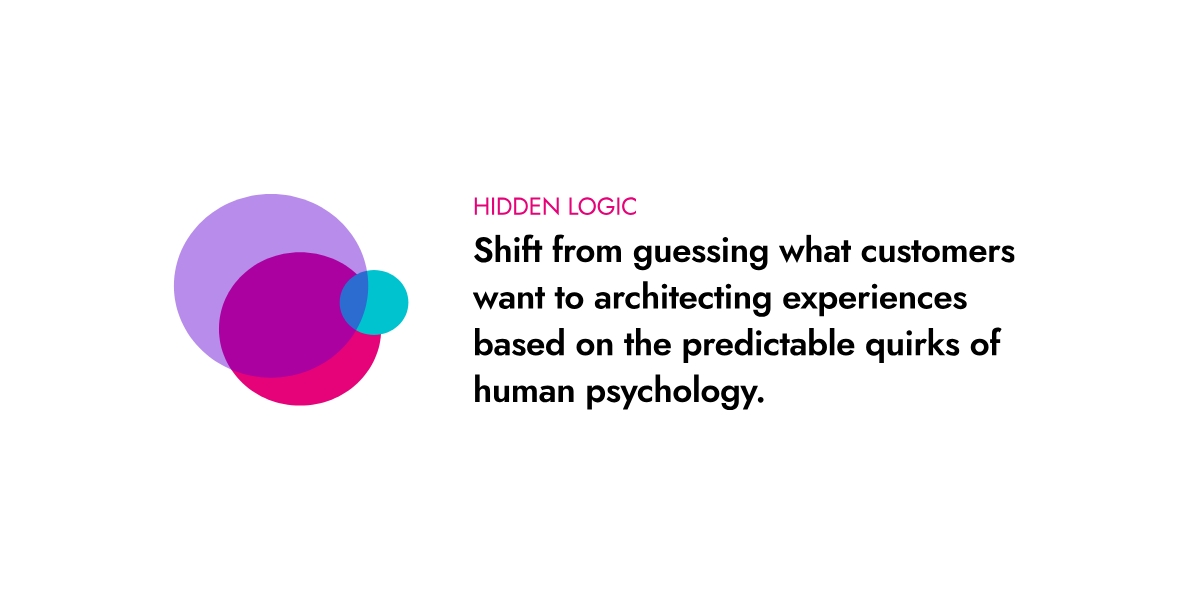
Plotting those two areas produces four zones. The Abandonment Zone is high friction with low reward (think lengthy sign-up forms with nothing compelling at the end). The Illusion Zone is low friction with low reward, where the user moves through quickly but walks away without anything of value. The Utility Zone is high friction with high reward, something like banking, which is functional but often painful. And then there’s the Delight Zone: low cognitive load with instant, personalised reward. Shannon describes this as where the hidden logic lives.

About Shannon Kennedy

Shannon Kennedy is Design Lead, Ad Products at SEEK. With a background spanning graphic design, print production, growth product design, eCommerce, education, FMCG and SaaS, she combines commercial rigour with a genuine commitment to mentoring the next generation of designers. Shannon is passionate about communicating design impact and helping teams connect their design choices to real business outcomes. 

This masterclass was hosted as part of the Women in Digital members’ webinar series. Want access to sessions like this? Learn more about WID membership.


tooba-masterclass-blog.jpg

June 2, 2026 Women in Digital

Why Most AI Projects Never Make It to Production (And a Simple Framework to Fix That)

Tooba Jalalidil, AI Architect Manager at Accenture and Co-Founder of Seekario.ai, joined the Women in Digital community to share a practical, no-jargon approach to building AI business cases that actually get off the ground.

We’ve all seen it happen. A team gets excited about AI, runs a flashy proof of concept, presents a compelling demo, and then… nothing. The project quietly dies somewhere between “that looked amazing” and “so, who’s going to build this for real?”

It turns out, this isn’t a rare experience. Across the industry, industry estimates suggest most AI projects never make it to production. And the problem isn’t usually the technology. It’s the business case.

That’s exactly what Tooba Jalalidil unpacked in her Women in Digital masterclass, From Idea to Execution: How to Build and Lead AI Business Cases. Drawing on more than a decade of experience in AI, ML, and data strategy, plus her dual perspective as both an enterprise leader at Accenture and the co-founder of AI startup Seekario.ai, Tooba shared a rigorous, human-centred framework for evaluating which AI ideas are worth pursuing, and which ones deserve a hard pass.

Stop solving for “AI wishes.” Start solving for real pain.

Before you write a single user story or spin up a proof of concept, Tooba says there’s one critical step most teams skip: talking to the people who will actually use the tool.

Too often, AI projects start with an executive’s enthusiasm (“we need to do something with AI”) rather than a frontline team’s genuine frustration. The result? Solutions that look impressive on a slide deck but add work, instead of removing it.

Tooba’s advice is refreshingly practical. Shadow real users. Sit with them while they do their jobs. Ask one simple question: “If you had an AI teammate for six months, what would you ask it to take off your plate first?”

If you can’t write a one-sentence problem statement from the user’s perspective, tied to a specific role and a measurable pain point, you’re not ready to design a POC.

The DVFF framework: a pre-flight checklist for AI

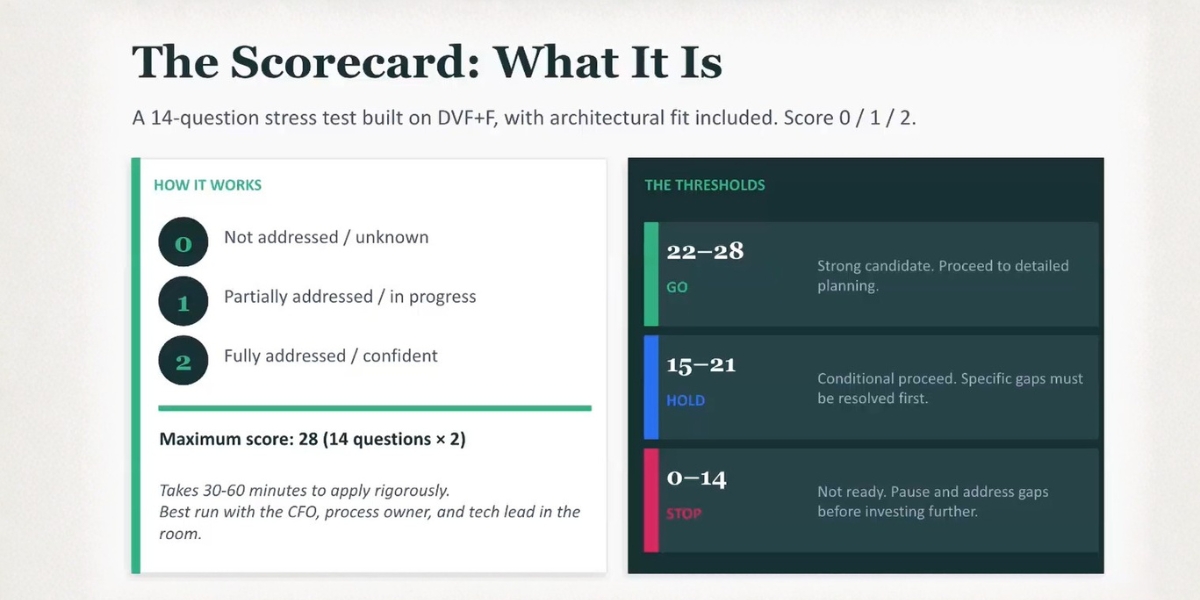
The centrepiece of Tooba’s masterclass was the DVFF framework, a structured way to pressure-test any AI initiative before committing time, budget, and team energy. It stands for Desirability, Viability, Feasibility, and Finance, and it works like a pre-flight checklist.

Desirability: Does anyone actually want this?

This isn’t about whether 100 people could use it. It’s about how much time or pain it genuinely removes. An AI tool that saves 100 analysts 30 minutes a day is a very different proposition from one that saves 100 people 60 seconds a month. If the audience is small and the impact is marginal, the desirability score should be low, no matter how clever the technology is.

Viability: What happens if we don’t build it?

If the honest answer is “nothing material breaks,” you’re probably looking at a nice-to-have, not a strategic priority. Strong viability statements connect directly to revenue, risk, or customer outcomes. Think: “Without this, our new sales reps take nine months to ramp up, costing an estimated $1.2M in lost bookings annually.”

Feasibility: Do we actually have what we need?

This means getting honest about data quality, infrastructure, and team skills. A POC built on historical call transcripts will fall apart if half the real-world calls happen on mobile phones that aren’t recorded. And if your platform only supports nightly batch loads but the use case needs near real-time data, the cost and complexity may outweigh the value.

Team capability is often the hidden constraint. Tooba flagged a common pattern: capable engineers without deep data science or AI engineering experience push raw data into large language models, then compensate for noisy outputs by chaining more agents and prompts, driving up costs without achieving reliable results.

Finance: Can you explain this in dollars?

If you can’t translate the value into a language your finance team understands, your project is vulnerable. Vague promises of “productivity” invite hard questions about why existing tools (like Microsoft Copilot or standard automation) can’t do the same thing. Be specific: hours saved per role per month, reduced churn, higher conversion rates, and avoided infrastructure spend.

Turning scores into decisions

One of the most useful parts of Tooba’s session was her guidance on how to actually use the framework in practice. She recommends running a short scoring workshop where stakeholders independently rate each dimension before comparing results.

Define three to five questions under each DVFF pillar and score them from zero to two. Then look at the total, but also pay attention to weak spots. A project with strong desirability and feasibility, but a finance score near zero, is likely to be killed at funding review, no matter how exciting the demo looked.

Set clear thresholds in advance. For example, on a scale of zero to 24: a score below 13 means park it or re-scope; 13 to 18 means investigate further; 19 and above means you have a genuine candidate for a proof of concept.

The people piece matters most

Tooba closed with something that resonated deeply with our community: even the strongest DVFF score won’t save an AI initiative if you underinvest in adoption. Budget for training, documentation, internal champions, and support. In a world where most people now have experience with consumer-grade AI tools like ChatGPT and Claude, anything less intuitive will struggle to gain traction.

The real takeaway? Stop chasing shiny AI concepts. Back a smaller number of initiatives that are deeply tied to real problems, technically grounded, and financially defensible. That’s how you move from impressive demos to sustainable, live systems.

About Tooba Jalalidil

Tooba Jalalidil is a Manager at Accenture, where she leads the design and delivery of Generative AI solutions, and the Co-Founder of Seekario.ai, where she is democratising AI for job seekers. She combines enterprise rigour with startup agility, bringing over a decade of experience in AI, ML, and data strategy to drive responsible innovation. Tooba is also a passionate advocate for diversity in STEM and an active mentor, dedicated to empowering the next generation of leaders across the technology community.

This masterclass was hosted as part of the Women in Digital members’ webinar series. Want access to sessions like this? Learn more about WID membership.

2026-Award-Changes.jpg

May 27, 2026 Women in Digital

What’s New for the 2026 WID National Awards

20 Categories, And More Ways to Nominate

The Women in Digital National Awards are back for 2026, and this year we’ve made some big changes to how we recognise excellence across Australia’s digital and technology industry.

We’ve listened to our community, looked at how the industry is evolving, and rebuilt our category lineup to better reflect the work being done right now. The result? 20 categories that are sharper, more inclusive, and designed to ensure no standout contribution goes unrecognised.

Here’s what’s changed and why.

Recognising That Great Work is a Team Sport

One of the clearest messages from our community has been this: the best digital work doesn’t happen in isolation. Behind every breakthrough product, every seamless customer experience, every secure system, there’s often a team making it happen.

That’s why in 2026, seven categories now accept both individual and team nominations. If you’ve built something brilliant together, we want to hear about it.

Product Excellence, Public Sector Excellence, and Software Engineering Excellence have all expanded from individual-only to welcome team nominations alongside individual entries. And our four brand new categories (more on those below) are built with team nominations in mind from day one.

Four New Categories

We’ve introduced four new categories to fill gaps our community has been telling us about. These are areas where exceptional work was happening, but didn’t have a natural home in our previous lineup of award categories.

Business Support Excellence (Individual or Team) recognises the people and teams powering digital organisations from behind the scenes. Operations, people and culture, finance, legal, project management: the roles that keep everything running so the technology can do its thing.

Cloud & Infrastructure Excellence (Individual or Team) is for the architects and engineers building and managing the platforms on which everything else runs on. Cloud, infrastructure, DevOps, platform engineering: this work deserves its own spotlight.

IT Excellence (Individual or Team) celebrates the professionals and teams delivering IT services, systems, and support that keep organisations moving. From enterprise architecture to service delivery, this category honours the backbone of every digital organisation.

Global Impact Excellence (Organisation or Team) is our most exciting new addition. Australia’s digital industry is increasingly operating at a global scale, and we wanted a category that recognises the organisations and teams driving meaningful impact beyond our borders.

Smarter Categories Through Consolidation

You will notice six categories from last year’s lineup are missing from the list, but nothing has been lost. Instead, we’ve combined and expanded to create categories that better reflect how these roles have evolved.

Digital Experience Excellence brings together what were previously separate CX Leader and UX Leader categories, with broadened criteria that reflect how deeply these disciplines have merged in practice. If you’re shaping how people interact with digital products and services, this is your category.

Growth Leader evolves from Digital Marketer of the Year with a wider lens. It now encompasses the full spectrum of growth-focused leadership, from digital marketing and brand strategy to commercial growth and revenue. Founders driving growth in their organisations will also find a home here.

Founder of the Year and Industry Excellence have been moved as standalone categories, but here’s why that’s actually good news: you were already showing up everywhere. Founders have consistently been among the strongest nominees across our program, from AI Leader to Champion of Change and more. Adding Global Impact Excellence to the mix this year only opens up more pathways. Rather than limiting founders to a single category, we want to encourage you to nominate for the categories that best reflect the work you’re doing right now. Building an AI product? That’s AI Leader. Scaling internationally? That’s Global Impact. Driving change in the industry? Champion of Change is calling. The work founders are doing deserves to be celebrated, and now there are more ways than ever to do exactly that. 

Expanded Criteria Where It Matters

Several returning categories have been updated to be more inclusive and to better reflect the breadth of impact happening in our community.

Champion of Change now has broadened criteria, recognising a wider range of advocacy and action driving meaningful change in the digital industry.

Indigenous Leader of the Year has been deliberately expanded. We’ve removed the single financial year restriction to better honour sustained and cumulative contributions, and we’ve broadened what leadership looks like in this space to welcome community-based roles alongside formal technology positions.

Rising Star has shifted from recognising those in their first five years of career to those under 25 years of age. This change ensures the category stays true to its intent: celebrating young people who are at the beginning of their digital careers, rather than experienced professionals making a career pivot into tech.

New Platform, Fresh Start

One more thing to know before you nominate: we’ve migrated to a brand new awards platform for 2026. The good news is that all existing nomination information has been carried across, so nothing from previous years has been lost. The only thing you’ll need to do is create a new login when you visit the portal. It takes less than a minute, and then you’re ready to go.

The Full 2026 Category Lineup

  • AI Leader of the Year – Individual
  • Allyship in Action – Individual
  • Business Support Excellence – Individual or Team
  • Champion of Change – Individual
  • Cloud & Infrastructure Excellence – Individual or Team
  • Cyber Leader of the Year – Individual
  • Data Leader of the Year – Individual
  • Digital Experience Excellence – Individual or Team
  • Digital Transformation Leader of the Year – Individual
  • Employer of the Year – Organisation
  • Executive Leader of the Year – Individual
  • Global Impact Excellence – Organisation or Team
  • Growth Leader of the Year – Individual
  • Indigenous Leader of the Year – Individual
  • IT Excellence – Individual or Team
  • Product Excellence of the Year – Individual or Team
  • Public Sector Excellence – Individual or Team
  • Rising Star of the Year (Under 25) – Individual
  • Software Engineering Excellence – Individual or Team
  • Technical Leader of the Year – Individual

A Word From Our Founder

Every year, the WID National Awards hold up a mirror to where our industry is heading. This year’s changes reflect what we’re seeing and hearing from the community: that impact is collaborative, that excellence shows up in roles we haven’t always celebrated, and that Australia’s digital talent is making waves well beyond our borders. Whether you’re leading a team, building infrastructure, driving growth, or just getting started in your career, there is a category for you. We can’t wait to see who you nominate.”Holly Hunt, Founder, Women in Digital

Nominations Are Now Open

The 2026 WID National Awards nominations open 27 May 2026. Don’t wait.

Key Dates

  • Nominations Open: 27 May 2026
  • Nominations Close: 19 July 2026
  • Finalists Announced: 2 September 2026
  • Winners Announced: 6 November 2026

You can nominate yourself, a colleague, a team member, or someone whose work deserves to be seen. Because you can’t be what you can’t see.

Nominate now at awards.womenindigital.org


Team-Next-Genthe-robots-are-coming.jpg

April 10, 2026 Women in Digital

Team Next Gen, the robots are coming — and impatience won’t save you

Holly Hunt, Founder & CEO of Women in Digital, shares her reflections from the Great Generational Debate.

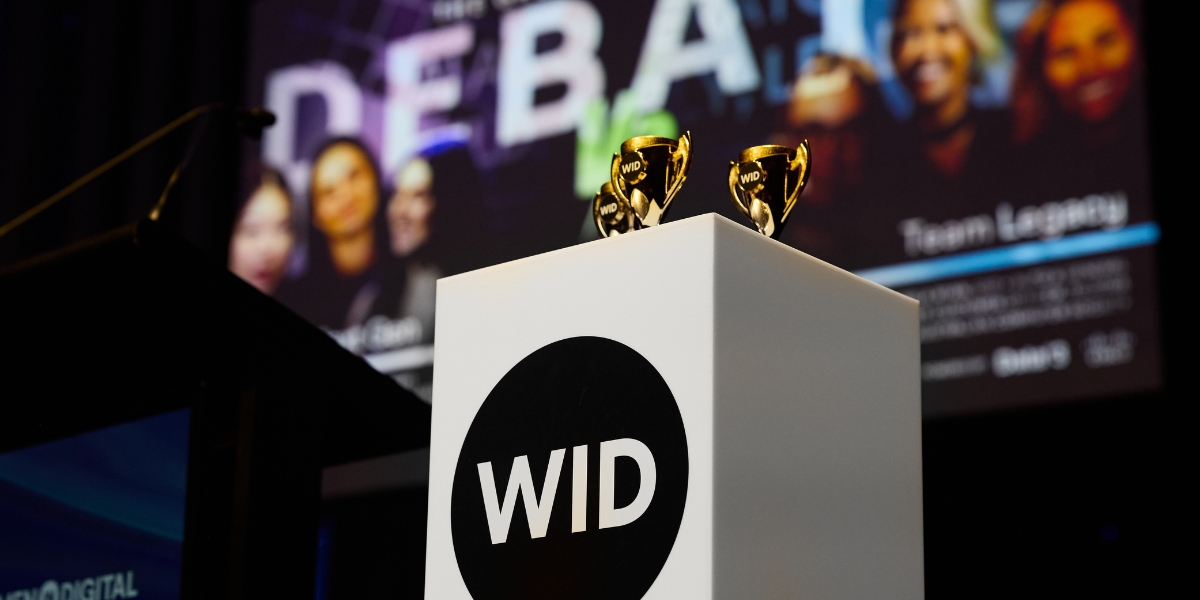
At Women in Digital’s Great Generational Debate, we brought together Team Legacy (Gen X and Boomers) and Team Next Gen (Gen Z and Alpha) to do something the workplace rarely makes space for — genuinely listen to each other. There were no winners. That was never the point. But walking away, I couldn’t shake a sense of unease.

As a Millennial, I found myself caught in the middle — nodding along to both sides. I related to Team Legacy’s belief in rolling up your sleeves and earning your seat at the table. I also respected Team Next Gen’s clarity about their own worth, their appetite for purpose, and their willingness to challenge systems that frankly do need challenging. But there is a tension that the debate surfaced that I don’t think we can afford to gloss over.

The uncomfortable truth about timing

Team Next Gen enters the workforce with higher expectations than any generation before them — and in many ways, rightly so. They want to understand the why behind commercial decisions. They want to be part of strategy conversations early. They will move roles if growth stalls. They have clearly defined boundaries and they are not afraid to use them.

These are not inherently bad qualities. In fact, several are admirable.

The problem is the timing.

AI is not a future threat — it is a present one. The entry-level roles that have traditionally been the training ground for careers in technology are already being replaced. The graduate pathway that Team Legacy walked, and that Millennials like me benefited from, looks fundamentally different today. In that environment, the expectations Team Next Gen are bringing to the table carry real
risk. When a junior employee signals early that they will leave if they aren’t in strategy conversations, or if the why isn’t clearly communicated — the cold, commercial reality is that it diminishes a leader’s incentive to invest in them. Mentorship, sponsorship, and genuine career development require time. And time-poor leaders will direct that investment where they see loyalty and commitment in return. Team Next Gen may be inadvertently doing themselves out of the very careers they want.

What this generation gets right

This is not a dismissal of Team Next Gen — far from it. One of the most memorable moments of the debate was a Next Gen panellist describing life as a game of chess: a game of strategy where you can never focus on just one piece. It was sharp, considered, and insightful.

Team Legacy openly admired their self-awareness and their refusal to derive all sense of worth from a job title. That evolution matters.

And they are right that the systems that got us here are not necessarily the systems that will take us forward.

The bridge worth building

The generational divide in the workplace is not a problem to be solved by one side conceding to the other. But it does require honesty.

For Team Next Gen: there is real value in seasons of intensity — in getting on with the job before you fully understand the strategy behind it, in demonstrating commitment before demanding flexibility. Adapting to the commercial realities of work, particularly in a rapidly shifting labour market, is not selling out. It is survival — and ultimately, it is how you build the influence to change the things that need changing.

For Team Legacy: the low seasons matter too. Supporting interests outside of work, investing in the development of junior talent even when the return is uncertain, and genuinely learning from a generation that has grown up with the world at their fingertips — literally — is not weakness. It is leadership.

As for me — I make no apologies for loving my work. For finding purpose in it. For believing that a career built with commitment and pride is something worth having. And I don’t think
Team Next Gen should apologise for wanting more from life than work alone. But in a world where machines are quietly taking the entry points, this generation cannot afford to let impatience cost them the career they are capable of building.

The robots are not waiting. Neither should they.


Leadership-in-the-Age-of-AI-Why-the-Human-Equation-Has-Never-Mattered-More.jpg

April 10, 2026 Women in Digital

Leadership in the Age of AI: Why the Human Equation Has Never Mattered More

Artificial intelligence is rewriting the rules of almost every industry in this country. From the mining giants of Western Australia to the fintech start-ups crowding Sydney’s CBD, no sector is untouched. 

Yet for all the breathless commentary about automation, machine learning and the imminent obsolescence of white-collar work, Australia’s most thoughtful business leaders are arriving at a counterintuitive conclusion: the AI era will be won or lost on fundamentally human terms.

That was the unmistakable message to emerge from this year’s Women in Digital International Women’s Day gatherings in Brisbane, Sydney and Melbourne, three events that brought together leaders across multiple generations to confront one of the defining questions of our working lives. 

Not “what will AI do to our jobs?” but rather, “what kind of leaders do we need to navigate what comes next?”

The answers were more nuanced, and more hopeful, than the AI doomsayers might expect.

The Weight of Earned Wisdom

To understand where we are headed, it helps to understand where we have been. Generation X, who entered the workforce in the analogue era, built their careers through the digital revolution.  They did not merely adapt to change.  Gen X were key drivers of that change.

In industries like technology, where women were routinely underestimated, advancement demanded more than competence. It required the kind of persistent, credibility-building effort that reshapes institutions from the inside.  

The parental leave entitlements that younger Australians can take for granted now, the flexibility policies that have become standard in competitive workplaces, the growing acknowledgement of mental health as a legitimate workplace concern with none of this happening spontaneously. It was hard-won, over decades by professionals who were willing to challenge a status quo that was not built with them in mind.

Hence, that legacy is relevant directly to the AI transformation.  Navigating disruption with genuine, structural, unsettling disruption, requires exactly the qualities and characterisitics working generations of the seventies, eighties, nineties and early 2000s forged.  The qualities of resilience, institutional knowledge and informed judgement that only comes from having weathered profound setbacks and changes before.

The Brilliance of Questioning Everything

And yet, experience alone will not be enough. The younger professionals now entering Australia’s workforce bring something equally essential to the table, which is routinely misread by the leaders who need it most.

When a millennial or Gen Z employee asks why a decision was made, or pushes back on a process that has always been done a certain way, that is not insubordination. It is precisely the disposition that thriving in an AI-powered economy demands. These are professionals who will not accept inherited assumptions, who want and expect transparency from leadership and who want to understand the purpose behind their work, not simply to execute tasks without context. And that’s tough for managers and leaders.

In an era where AI can handle an ever-expanding range of routine cognitive work, the humans who will add the most value are those who question, synthesise and reimagine. 

Leaders who channel that energy effectively will build genuinely adaptive people who will grow organisations and beyond. Those who dismiss it as entitlement will find themselves leading teams that are neither innovative nor engaged.  In technology, retention and growth of our workforce are instrumental to organisational success.  Having the right people, in the right jobs at the right time, enables greater productivity which in turn drives performance and profitability. 

What Leadership Actually Requires Now

The best leaders of this era will be those who create environments where ideas are not gatekept by seniority, where psychological safety is genuine, curiosity is rewarded and the reasoning behind strategic decisions is shared openly.  That is challenging for some managers and leaders who have in previous times worked where organisational strategies and plans are kept behind closed doors.  Complicating this further, governance structures, shareholder policies and competitive advantage.

So perhaps, it comes back to a return to first principles. Workflows transform. But ownership of outcomes, continuous learning, engagement and a willingness to do the hard work, with these remain universal and non-negotiable. No algorithm substitutes for commitment and persistence.

Australia’s workplaces are at their most powerful and most productive when experience and fresh thinking operate together, not in opposition. The organisations that grasp this will be the ones who build cultures of genuine intergenerational collaboration and will be best placed to lead in the decade ahead.

The age of AI is here. The leaders who will define this generational change will be human-centric, human-positive and human-motivated.


Website-Banner-Image-Update-1200-x-600-px.jpg

April 10, 2026 Women in Digital

Artificial Intelligence – Opportunity Brings Immense Responsibility

There is no doubt we are working and living in a time of exponential change, where technological advancements are moving faster than ever before.

Whilst the crossroad of technology, leadership and generational forces is reshaping the modern workplace, AI is rapidly transforming how organisations operate with equity, representation, participation, belonging, and leadership evolving just as quickly.  To add, at Women in Digital’s International Women’s Day events held in Brisbane, Sydney and Melbourne, it is evident these subjects are only gaining momentum.

Panel discussions featuring senior leaders across science, data, technology, cybersecurity and global industry reinforcing the future of work will be shaped as much by human connection and culture as by technological innovations and advancements.

The evidence overwhelmingly supporting current challenges and opportunities are not simply about adaptation, but navigating profound shifts in how people work, how career paths evolve and how opportunities are created and shared.

At Women in Digital, we strive to ensure that the conversations inspired by this year’s IWD events are not tokenistic and that accountable actions are implemented in organisations across Australia. Women in Digital has prepared articles summarising the key takeaways and trends important to women, our male allies and business leaders across the digital and tech sectors.

Artificial Intelligence Opportunity

It is widely believed that Artificial Intelligence (AI) is the defining shift of the next decade.  AI represents a structural shift in how work is performed, how decisions are made and how value is created.  AI will impact the size of workforces and their capability. Roles that centre on repetitive processes are more vulnerable and open to immense change.  Some may evolve, many will disappear.

A key theme of our speakers this year highlighted that AI will only elevate the importance of human connection and capabilities and nothing will ever replace the enduring value of hard work, persistence and continuous learning.

The most effective strategy for navigating AI disruption is engaging and learning. Professionals who take the time to understand AI tools, experiment with them, and integrate them into their work will be better positioned than those who resist change. Many organisations are already investing heavily in workforce education – providing employees with access to AI tools and training programs that build familiarity and confidence.

These efforts serve a critical purpose: helping employees see AI not as a threat but as a tool for augmentation and productivityIn many cases, AI can eliminate repetitive tasks and allow professionals to focus on more creative, strategic, and human-centered work. In this new environment, the most valuable professionals will be those who combine technological literacy with human judgment with human connectivity.

As AI adoption accelerates, another issue becomes increasingly important: governanceAI systems can amplify existing biases if they are developed without diverse perspectives and ethical oversight.  This makes representation within AI development teams especially important.If the individuals designing AI systems do not reflect the diversity of the societies they serve, those systems may inadvertently reproduce existing inequalities.

Strong governance frameworks, ethical oversight, and inclusive development practices are therefore essential. Organisations must treat AI not simply as a technology initiative but as a responsibility that requires careful stewardship

Professionals who will thrive in an AI-driven world need to focus on developing the following skills:

Curiosity.
Individuals must take responsibility for understanding how AI tools work and how they can be applied. Continuous learning will become a professional necessity.

Critical Thinking.
AI systems generate outputs, but humans must assess their accuracy, relevance, and implications.

Creativity.
Original thinking, imagination, and the ability to see new possibilities remain uniquely human strengths.

Entrepreneurial Mindset.
Understanding how technology can solve real-world problems will create new opportunities for innovation and value creation.

Ethical Awareness.
As AI becomes embedded in decision-making systems, governance, transparency, and societal impact will become central leadership responsibilities.

Human Connectedness.
An AI-driven world will not be defined by the technology that surrounds us, but by our ability to use it to deepen empathy, strengthen relationships and preserve the human experience at the core of leadership and innovation within our professional and personal lives.

What Next?

The transition to an AI-driven future is not a passive event; it demands active participation and conscious leadership. The responsibility to harness AI as a force for good with one that promotes augmentation, productivity, and, crucially, equitable outcome, will rest with every individual and every organisation.

At Women in Digital, we hope that you allow the energy and insights from this International Women’s Day, serve you as a catalyst for action.

For business leaders, this means actively investing in governance frameworks, inclusive development teams, and comprehensive workforce education. For professionals, it means cultivating the essential human skills of curiosity, critical thinking, creativity and ethical awareness, the human traits that AI can never replace.


dominique-powis-masterclass-6.jpg

March 25, 2026 Women in Digital

Thriving by Design: How to Find a Workplace Where You Can Truly Succeed

For many women in digital and technology, career advice tends to focus on external markers of success: get the promotion, grow your salary, build your skills, land the title.

But what if the better question is not just how do I get ahead?
What if it is how do I build a career in an environment where I can actually thrive? In fact, if I do this first, I set myself up for success.

That was the heart of a recent Women in Digital masterclass led by technology executive Dominique Powis, who shared a practical and deeply personal framework for understanding what makes work sustainable, fulfilling and energising.

Her message was clear: thriving at work is not accidental. It is something we can – and should – design for.

Why thriving matters

Too often, people stay in workplaces that drain them because they assume that discomfort is just part of having a career. But misalignment at work is not a small thing. It affects confidence, well-being, motivation and performance. When people are working in environments that align with their strengths, values, leadership needs and sense of purpose, they are more engaged, more resilient and more likely to do their best work. When those things are out of sync, even a “good job on paper” can feel exhausting.

The challenge is that many of us are taught to assess opportunities by looking outward first. Salary. Brand. Role. Perks. Prestige. Dominique argues that the process needs to start inward.

The Thrive by Design framework

At the centre of Dominique’s framework is one simple idea: before you can find the right workplace, you need to understand yourself.

Her model is built around four key pillars:

  • your strengths
  • your values and team alignment
  • your leadership fit
  • your sense of purpose and company alignment

Together, these create a practical filter for evaluating your current job, your next move, and even the type of team you want to build.

1. Know your strengths

One of the strongest themes in the session was the importance of spending more time in your strengths and less time forcing yourself into work that drains you. Dominique put it simply: if you are great at rugby and terrible at maths, do not hire a maths tutor. Get a rugby coach.

It is a reminder that career growth does not always come from fixing weaknesses. Often, the biggest gains come from doubling down on what already energises and differentiates you. If you have ever had that buzz at work where time disappears, you are fully engaged, and you feel sharp and effective, chances are you are working in your strengths. If a task leaves you depleted, frustrated or flat every single time, it may be sitting in an area that is not natural for you.

A useful starting point is to make two lists:

  • What you love and are good at, and 
  • What you dislike and struggle with. 

Over time, patterns emerge. Personality and strengths tools can help too. Whether it is Myers-Briggs, Gallup StrengthsFinder, DiSC or similar frameworks, these are not about boxing yourself in. They are about helping you build language that works best for you.

Once you know your strengths, you can start testing whether a role will actually allow you to use them. Instead of only asking what the job involves, ask:

  1. What does high performance in this role look like?
  2. What skills make someone successful here?
  3. What does this role struggle with the most?

Those answers often reveal far more than the job ad ever will.

2. Be clear on your Values

If strengths help you perform, values help you stay. A role can look perfect from the outside, but if it conflicts with your core values, it will eventually wear you down. Dominique spoke candidly about this, sharing an early career experience in a workplace marked by sexism, bullying and disrespect. It was a painful chapter, but it also helped crystallise something essential: respect became her non-negotiable, #1 value.

That clarity matters.

When you know your number one value, you can spot misalignment much faster. You stop second-guessing yourself when something feels off. You understand why a role that seems fine on paper still feels wrong in your body. For some people, that number one value may be respect. For others, it may be fairness, honesty, autonomy, creativity, accountability or inclusion. Whatever it is, finding it gives you a powerful compass.

And once you know it, you can test for it.

Ask questions like:

  1. How are values demonstrated day to day here?
  2. What behaviours are rewarded on this team?
  3. How are difficult conversations handled?
  4. How does the company deal with poor behaviour?

Anyone can write values on a website. What matters is whether those values show up, especially when things get hard.

3. Pay attention to leadership

People often say employees do not leave companies; they leave managers. Dominique’s experience strongly supports that idea. Leadership is not just about capability. It is about trust and whether the people at the top create clarity, model accountability, communicate honestly and make you feel safe enough to contribute.

What stood out in the session was Dominique’s preference for executive chemistry over executive presence. Rather than focusing on hierarchy, image, or polished authority, she looks for authenticity, collaboration, and visible alignment among leaders.

A leadership team does not need to be perfect. But people want to see that leaders genuinely respect each other, can navigate hard times together, and lead with people in mind. During growth, change or uncertainty, that becomes even more important.

If you are assessing a company’s leadership, ask:

  1. How are major decisions made and communicated?
  2. How does leadership respond when things do not go to plan?
  3. What behaviours from leaders make employees feel trusted and empowered?

These questions give you a better sense of how a company actually operates, especially under pressure.

4. Understand your Purpose

The final pillar is purpose. Purpose does not have to mean changing the world in a dramatic or public way. It simply means understanding what makes work meaningful for you.

For some people, purpose comes from impact. For others, it comes from problem-solving, building better systems, supporting communities, improving healthcare or creating opportunities for others. And for some, purpose may be more practical: earning well, creating security, funding a life they love outside work.

All of those are valid. The key is knowing what drives you, because when work gets hard, purpose is what gives you staying power. Dominique described the ideal workplace as the intersection of your strengths, your values, your impact and your energy. When those things line up, work feels less like survival and more like momentum.

That is also why purpose matters so much in team performance. People are more resilient when they understand not just what they are doing, but why it matters.

Building a more intentional career

One of the strongest takeaways from the session was that career decisions should be more intentional than reactive. Too many people scatter applications everywhere, chase roles they do not even really want, or ignore their gut because they feel pressure to just get something. But when you have a framework, you can move differently.

That self-awareness also changes how you show up in interviews. You become clearer, more grounded and more compelling because you understand what you bring and what environment brings out your best.


Shivani-Masterclass.jpg

February 20, 2026 Women in Digital

From Chaos to Clarity

The Leadership System Shivani Gupta Shared With Women in Digital

There’s a particular kind of tired that comes from working hard, and still feeling like you’re not getting where you want to go.

In our recent Women in Digital masterclass, leadership coach and entrepreneur Shivani Gupta spoke candidly about the seasons of business (and life) where effort doesn’t equal outcomes: strong revenue, but not enough cash in the bank; constant motion, but no real progress; a full calendar, but a persistent sense of chaos.
Her message was clear: chaos has a cost – to our decision-making, our teams, our energy, our results, and our relationships. The antidote isn’t more hustle. It’s clarity.

And clarity, Shivani taught, isn’t a personality trait. It’s a practice, supported by systems, cadence, and brave choices.

Masterclass Recap

Most of us default to effort when things feel uncertain. We work longer, say yes more often, and try to hold more in our heads. But chaos thrives on that approach. The “why” behind building clarity is simple: when your attention is fragmented, you make slower decisions, your standards slip, and your team fills the gaps with assumptions. Over time, that creates a culture where busyness replaces progress.

So how do you actually change behaviour — yours and your team’s — so clarity becomes the default?

1) Stop rewarding chaos with attention

In many teams, the loudest problem wins. The most urgent email gets the fastest response. The last-minute request becomes everyone’s priority. It feels responsible in the moment, but it trains your organisation to escalate instead of plan.

Change behaviour by making priorities visible and consistent.
A practical place to start is to define “musts” versus “nice-to-haves.” Shivani shared a simple daily practice: identify your top three “must do” outcomes for the day, and complete them before the noise gets a vote. The point isn’t productivity theatre. It’s decision hygiene. When you consistently act on priorities first, you teach your brain (and your team) what matters.

Try this: tomorrow, write your top three musts on a sticky note. If you only get those done, the day counts as a win. Everything else becomes optional, not emotional.

2) Replace “trying harder” with better roles

One of the fastest paths to chaos is role confusion. When people don’t know what they own, everything becomes a group project, or it all rolls uphill to the most capable person.

Shivani spoke about a common leadership trap: hiring people who think like you, then wondering why execution is messy. The deeper “why” is identity – we often feel safest when we’re surrounded by similar thinkers. But high-performing teams are built on complementary strengths.

Change behaviour by designing for differences.

Ask: where do we need vision, and where do we need integration? Who sets direction, and who builds the rhythm that makes direction real? In practice, this means clarifying decision rights, ownership, and boundaries, especially around high performers. When high performers become the default solution to every problem, you don’t just burn them out; you train everyone else to disengage.

Try this: list your team’s top five recurring decisions. Put a single name next to each: who owns it, who contributes, who approves. Clarity reduces dependence.

3) Turn meetings into decision machines

Meetings often become a weekly ritual of discussing the same issues with slightly different words. That’s not a meeting problem, it’s a behavioural norm: avoiding decisions feels safer than making the “wrong” call.

Change behaviour by making meetings serve one job: decisions.

A useful test Shivani offered: a meeting should create alignment, solve problems, or develop people. If it does none of those, it’s a social gathering with a calendar invite. Bring only the data you need, spend minimal time reviewing it, and invest the real time in solving what’s off track.

Try this: end every meeting with three lines: Decision made. Owner. Next action by when. If you can’t write those lines, the meeting didn’t do its job.

4) Make “no” a strategic skill, not a personality trait

Boundary issues are rarely about other people. They’re about what you tolerate because saying no feels uncomfortable. Many of us (especially women) have been rewarded for being helpful, responsive, and agreeable, until it becomes a silent resentment loop.

Change behaviour by practising small nos.

Start with low-stakes moments: a meeting you don’t need to attend, a task you can delegate, a request that doesn’t match your goals. A calm no is a leadership act; it protects focus and models sustainability.

Try this script: “I can’t do that, but I can do this.” Boundaries land better when you pair them with an alternative.

The real shift: clarity is a cadence

The most powerful idea Shivani shared is that clarity isn’t an annual planning exercise. It’s a rhythm. Prioritise daily. Review weekly. Adjust every 90 days. Create a culture where decisions are made, ownership is clear, and attention follows what matters, not what shouts.

If 2026 is going to feel different, don’t aim for a total overhaul. Pick one behaviour to change this quarter — and practise it until it becomes normal. That’s how chaos turns into clarity: not by working harder, but by working on purpose.


Women in Digital are hosting 10+ Masterclasses throughout 2026. As a Women in Digital Member, you can register for these Masterclasses for free, as well as access them through the Women in Digital Member Portal. Sign up as a member today!


2026-WID-Event-Banner_2160x1080_Eventbrite-2-1200x600.jpg

February 12, 2026 Women in Digital

Data In, Data Out: The Hidden Truths Behind AI, Bias and Trust

Across Brisbane, Sydney and Melbourne, our Data In, Data Out panel brought together leaders, technologists and decision-makers to unpack a simple but powerful truth:

What goes in absolutely determines what comes out.

As AI continues to influence the way we collect and analyse data, strategy is only as powerful as the integrity behind the data that fuels it. And while we often focus on tools, automation and acceleration, this session was designed to spark the uncomfortable, but necessary, conversations about what sits beneath the surface.

Because as we dive deeper into an algorithm-driven future, one thing became clear… Decisions are only as fair as the data behind them.

Why This Discussion Matters Right Now 

An excerpt from Carrie Mott’s Blog ‘Women In Digital “Data In, Data Out” Series: When AI Moves Fast, Trust Has to Move Faster

This “Data In, Data Out” series was designed to be practical, honest and grounded in lived experience. Not theory. Not hype. The real trade-offs. The blind spots. The uncomfortable “wait… are we sure this dataset should even exist?” moments. 

We are seeing a widening gap between ambition and readiness.

ADAPT’s State of the Nation: Data and AI in Australia 2025 shows only 24% of leaders believe their data is AI-ready, despite AI being treated as strategic across many organisations. That gap is not abstract. It is structural. And it is growing.

Globally, McKinsey reports that 65% of organisations are now using generative AI regularly in at least one business function, nearly double the previous year. Yet trust in digital systems continues to fluctuate as high-profile data incidents persist. Ambition is accelerating. Foundations are not always keeping pace. And the broader context matters.

UN Women Australia’s International Women’s Day 2026 theme, “Balance the Scales”, alongside the global campaign “Give to Gain”, calls for structural fairness, shared accountability and collective action. If we want fair outcomes at scale, we have to build fair systems from the start. Which brings us back to data.

Key Takeaways from the Panel

Bias is not just a data problem

We often blame the algorithm. But one of the strongest themes across all three cities was this: bias is most dangerous during interpretation and application.

You can have “clean” data. You can have technically robust models. But without context, diversity of thought and critical oversight, you will still fail.

Bias does not magically disappear at scale. If it exists in the input, it multiplies in the output. And in a world where AI consumes and generates information at unprecedented speed, that amplification happens almost instantly.

Traditionally, bias travelled at the speed of human reporting. Now, it moves at the speed of machines. Which makes Human-in-the-Loop (HITL) governance more critical than ever.

Trust Is the Ultimate Currency

Technology adoption is not just about capability. It is about belief. We discussed the real risk of failing data integrity: erosion of trust.

If a frontline team uses a “Next Best Action” tool and it fails them twice, they will stop using it. It doesn’t matter how sophisticated the model is behind the scenes. Cultural buy-in disappears quickly. And without trust, you are not a data-driven organisation, you are simply a data-producing one.

Trust is built through:

  • Transparency
  • Traceability
  • Clear ownership
  • Accountability in action

Diversity Is a Technical Requirement

Another powerful theme across the panels: diversity is a technical necessity. If the room where the models are built is not diverse, the insights will not be either. Reducing bias requires expanding perspective — across data science teams, leadership, product owners and decision-makers. Inclusion cannot be assumed. It must be designed.

The decentralisation of data tasks makes this even more important. Today, almost everyone manages data in some form — but not everyone is trained as a data manager.

AI may feel like the answer to life, the universe and everything, but the fundamentals still matter:

  • Data quality
  • Data completeness
  • Context across the lifecycle
  • Ethical interpretation

And layered across all of this is something deeply human: psychological bias. That psychological layer, unique to our lived experiences, influences how data is framed, questioned and acted upon.

The Simple Truth We Couldn’t Escape

Across three cities and countless conversations, we kept coming back to the same conclusion:

Data integrity is strategy.
Inclusion is architecture.
Trust is currency.

And what goes in absolutely determines what comes out.

The future of AI will not be defined by the tools we adopt, but by the standards we set – in leadership, governance, diversity and culture.

Thank you to everyone who joined us in Brisbane, Sydney and Melbourne for leaning into the complexity and engaging in the conversations that matter.

And, of course, to everyone who attended and contributed to the conversation! Stay curious, question everything, and remember: What goes IN absolutely determines what comes OUT. 


women-in-ai.jpg

January 28, 2026 Women in Digital

2026 Women to Watch in AI & Machine Learning

In our recent “2026 Digital Trends Webinar”, we explored the powerful forces shaping Australia’s digital landscape. From AI acceleration and cybersecurity resilience, to the rapid evolution of data, cloud and human-centred design, one theme was unmistakably clear:

Women are breaking barriers across Australia’s digital transformation.

Across every sector, women are leading innovation, guiding strategy, strengthening resilience and championing the kind of inclusive, human-focused progress our industry needs. Yet, too often, their contributions go under-recognised, especially in the emerging and high-impact fields transforming our future.

That’s why we’re spotlighting the extraordinary leaders, builders, researchers, strategists and changemakers shaping Australia’s digital economy in 2026. Some are Women in Digital Award winners, others are rising leaders driving impact behind the scenes, but all represent the talent and vision powering Australia’s digital future. As we continue to navigate change and uncertainty together, these women remind us that leadership isn’t just about adapting to the future, it’s about shaping it.


Dr. Ariella Heffernan Marks

Founder, Ovum

Dr Ariella Heffernan-Marks is a doctor, scientist, and founder reshaping womens healthcare. As a young intern, she witnessed women fearful of the medical system, misdiagnosed, and left searching for answers online. Driven to change this, she built Ovum  an AI health partner designed for women. Ovum empowers women to track, understand, and advocate for their health, while creating the worlds first women-specific AI dataset. Ariella raised $1.7M pre-seed to tackle a $1T global gender health gap, leading a quiet revolution against a system that has excluded women for centuries. Her vision is bold yet deeply personal: a future where women are seen, heard, and believed with healthcare that reflects their physiology, their complexity, and their worth.

Ariella was named the Woman in Digital of the Year in 2025, as well as AI Leader of the Year at the recent Women in Digital National Awards Gala.

Eloise Leaver

Manager, Industry Growth, NAIC

Eloise leads the Industry Growth team at the National AI Centre, where she is focused on building confidence and trust in AI to benefit Australians — now and into the future.

Passionate about shaping a future where Australia leads in AI innovation, Eloise supports the growth of local AI innovators and drives adoption across industries. With a strong background in working with startups, Eloise has helped early-stage businesses across sectors to innovate, scale, and succeed.

Sarah Bradley

Principal Data Scientist, Nasdaq

Sarah is the Principal Data Scientist at Nasdaq Market Surveillance, where she leads the research, development and deployment of AI and machine learning systems that safeguard the integrity of global financial markets. Nasdaq’s market surveillance technology — the global leader in its field — supports more than 50 exchanges and 15 regulators worldwide to detect financial crime and maintain trust in capital markets.

Her work focuses on building AI tools that are accurate, transparent and trusted in high-stakes regulatory environments. Sarah has led projects that have transformed how analysts investigate market activity, accelerating investigations and improving the quality of insights, while ensuring alignment with regulatory expectations.

Recognised as the Women in AI APAC Award Winner (Finance), a finalist in the Australian Financial Review AI Awards, and a speaker at Vogue Codes and AI4HER, Sarah combines deep technical expertise with strong communication skills, enabling her to bridge the gap between research, product teams, regulators and the public.

Beyond her role at Nasdaq, Sarah is a passionate advocate for responsible AI and greater representation in STEM. As the Australian Lead for Nasdaq’s Women in Tech Network, she has driven initiatives to support women in technology and actively volunteers as a school speaker to inspire the next generation of girls to pursue careers in STEM.

Amanda Johnstone

Founding CEO, Transhuman

Amanda Johnstone is a technologist and global futurist shaping of humanity in the age of artificial intelligence. Recognised by TIME as a Next Generation Leader, honoured by The CEO Magazine as Start-Up Executive of the Year, named a Top Voice of AI by LinkedIn, and in the Top 16 AI Influencers by Salesforce, Amanda stands at the forefront of the 5th Industrial Revolution; where technology, ethics, and human potential converge.

As the CEO of Transhuman Inc., a company she Founded in 2014, Amanda pioneered conversations and technical builds around neuroscience, AI ethics, and human behaviour long before they became mainstream. Her work has redefined how emerging technologies influence the way we think, connect, and evolve. Her inventions in suicide prevention technology have reached over 80 countries and assisting over 20,000 vulnerable people to get mental health peer support in real time, while her emotionAI innovations and artificial intelligence leadership continue to inform governments, Fortune 500 companies, and global think tanks on the urgent need for responsible innovation and scale. Her delivery: empowering, easy to digest and exciting!

With patents in complex human–machine symbiosis, psychology and social connection, alongside her role advising Sovereign Australia AI, Amanda is a champion of digital responsibility, self-sovereignty and national sovereignty. She is one of the most compelling voices on dopamine-driven engagement loops, digital addiction, and cognitive polarisation, helping the world build resilience in an AI powered era.

Her entrepreneurial spirit sparked early. At just 17, she co-founded retail chain Sebachi, one of Australia’s first e-commerce stores, guided by mentorship from Cotton On founder Nigel Austin. Now, at 39, she continues to blend creativity with foresight, travelling across the world to work with her internal team, advise leaders, inspire audiences, and explore the world’s cultural and technological frontiers. You’ve seen her on stages for Universal Music, YPO, Allianz, Rohde & Schwarz, Google, Kellogg’s, Spark, SAS, Optus, Zoom, the Australian Government and Stanford and as an ambassador for brands including Salesforce, Plaud, Paco Rabanne, TIME, Selfridges and Docusign.

With an unmatched ability to “see around corners,” she empowers organisations and individuals to not only adapt to the future but to shape it with courage, empathy, and vision.

Dr Sue Keay

Director UNSW AI Institute, UNSW

Sue Keay is an experienced leader in emerging technologies, with a strong focus on the development and deployment of robotics and artificial intelligence. Recently recognised as one of 50 remarkable and inspirational women in Australian science by COSMOS, she is widely respected across the robotics and AI ecosystem and regularly consults, advises and speaks on how organisations and leaders can successfully embrace technological change. She recently developed the short course Robotics for Business Leaders with Monash College.

Sue is the Director of the UNSW AI Institute, a Fellow of the Australian Academy of Technology and Engineering (ATSE), a member of the prestigious Kingston AI Group, Founder and Chair of the Robotics Australia Group, and an Adjunct Professor at QUT. She also holds numerous board and advisory roles across robotics, AI and emerging technologies, including contributing to Australia’s National Robotics Strategy.

Her leadership has been widely recognised. Sue has been named one of Queensland’s most influential people in The Courier-Mail Power100, featured by SME as one of 20 women globally making their mark in robotics and automation, recognised as an outstanding contributor to the drone and robotics industry, and awarded Superstar of STEM by Science & Technology Australia. She is known for leading technology-driven organisations with integrity, a strong people-first approach and a focus on real-world impact.

A committed advocate for diversity in technology, Sue represents Oceania for Women in Robotics and was instrumental in bringing the Grace Hopper Celebration to Australia in 2019.

Trained as a scientist with highly developed strategic, analytical and commercial skills, Sue established the world’s first robotic vision research centre, the Australian Centre for Robotic Vision. She led the development of Australia’s first and second robotics roadmaps, laying the foundations for a national robotics strategy. Her previous roles include inaugural robotics technology lead at OZ Minerals (now BHP), inaugural CEO of the Queensland AI Hub, and leadership of cyber-physical systems research at CSIRO’s Data61.

Lou Compagnone

Director of Artificial Intelligence, Datacom

Lou combines artificial intelligence, service design, and future thinking to help organisations create, shape, and prepare for their AI-driven future. 

She combines design, futures thinking and strategy to help organisations improve their products and services of today and shape their business of tomorrow by considering – and preparing for – the future. Lou love collaborating with diverse individuals, teams, organisations, staff, customers and communities to understand gnarly problems and co-design solutions that create positive change by considering the impacts on people, process, products/technology and planet.

For the past two decades, she has assisted organisations around the world to solve a diverse range of challenges – from helping citizens access better services to helping singles find their someone.

Ashlea Stewart

Business Lead – AI & Emerging Technology, Suncorp

Ashlea is a business lead in Suncorp’s AI & Emerging Technology team, with more than 17 years’ experience delivering innovation across financial services. She led the launch of Single View of Claim, Suncorp’s first generative AI product and a multi-award finalist, designed to centralise and simplify insurance claim information to support faster and fairer claims processing.

She is known for bridging the gap between strategy and real-world value, translating technical potential into human-centred outcomes. A strong advocate for ethical AI, Ashlea embeds trust, transparency and usability into every solution she delivers.

Creativity is a defining feature of her work. As a visual thinker and lifelong drawer, she uses imagery and illustration to break down complex ideas, align teams and drive shared understanding. Ashlea is deeply passionate about building capability and culture, helping others feel confident with emerging technologies through hands-on learning, storytelling and a sense of fun along the way.

Kate Pounder

Chair, RNA Australia, Board Member, Essential Energy, Board Member, Tech Policy Design Institute

Kate is a leader in tech and innovation in Australia with experience working across the government, private and non-profit sectors. 

She is the Chair of RNA Australia, a Board Member of Essential Energy, and on the Board of Trustees for the Powerhouse Museum Group and a policy adviser to OpenAI in Australia.

Previously, Kate was the inaugural CEO of the Tech Council of Australia, a Partner in start-up analytics firm, AlphaBeta, and a consultant at McKinsey & Company specialising in the public sector. She has also worked for Network Ten, the Australian Industry Group and the federal government.

Dr. Nici Sweaney

Founder, AI Her Way

Dr Nici Sweaney is an internationally recognised leader in ethical AI, equity, and governance. With 20 years of experience across science, education, and strategy, she is the founder and CEO of AI Her Way, a consultancy equipping organisations to adopt AI responsibly and sustainably.

A Senior Fellow at the AI for Developing Countries Forum, Dr Sweaney contributes to global conversations on inclusive innovation and data ethics. Her work has shaped Australia’s Responsible AI Use Guidelines and generative AI strategies in education. She has delivered over 100 keynotes and training sessions – including TEDx and the United Nations – and supported 70+ organisations such as Paramount+, WWF, Canon, the ARIAs, Melbourne Cricket Ground, and the Australian Retirement Trust.

Her insights have been featured in Forbes Women’s Issue 2025, the Australian Financial Review, and across major media outlets including ABC, Mamamia, and HerCanberra. She won AI Female Leader of the year at the Australian AI Awards (2025), was a medalist at the Women Changing the World Awards (2024), and nominated for The Times 100 Most Influential Companies 2026.

Named one of Microsoft News’ Top 10 Trailblazing Entrepreneurs in AI, Dr Sweaney’s work is grounded in a clear belief: when governed ethically, AI becomes a tool for empowerment – not exclusion.

Lucy Poole

Deputy Chief Executive Officer, Strategy, Planning and Performance, Digital Transformation Agency

Lucy leads the Strategy, Planning and Performance Division which focuses on providing whole-of-government strategic leadership to the development and implementation of digital policies, the Australian Government Architecture as well as the Data and Digital Government Strategy.

In this role, Lucy also oversees the management of the government’s digital investment pipeline to ensure an integrated and coordinated approach to government’s investment in digital and ICT.

A key priority for Lucy is driving the achievement of the Australian Government’s vision to implement world class digital capabilities to deliver outstanding outcomes for all. This includes the analysis of how emerging technologies can better support the delivery of simple, secure and connected services for all people and businesses.

Prior to joining the DTA, Lucy held senior executive roles at the Department of Prime Minister and Cabinet and the Australian Public Service Commission where she led several transformation programs. Lucy has experience across a range of sectors including Australian federal and state governments, the private sector and the UK civil service.


Artificial intelligence and machine learning are rapidly reshaping Australia’s digital future, and the women featured in this list highlight why representation, leadership and diversity in this space matter more than ever. Their work spans research and applied AI, data science, product and platform development, ethics and governance, enterprise transformation, and real-world deployment at scale. What unites them is a shared commitment to building AI systems that are effective, responsible and designed with people at the centre.

As explored in our recent 2026 Digital Trends Webinar, the pace of change across AI capability, adoption and regulation continues to accelerate. With that acceleration comes both immense opportunity and significant responsibility. The leaders featured here are not simply adopting AI as a tool; they are shaping how it is built, governed and embedded into organisations and society in ways that will define the next decade of innovation.

By celebrating their stories, we aim to inspire the next generation of AI and machine learning talent, amplify the voices influencing how these technologies evolve, and reinforce the importance of diverse perspectives in creating systems that are fair, trustworthy and impactful.

While this list spotlights a remarkable group of leaders, innovators and changemakers, we know there are many more women across our community and the broader ecosystem driving progress in AI and machine learning every day. We couldn’t include everyone, but we encourage you to explore the inspiring talent featured in our 2025 Women in Digital Awards finalists — a powerful showcase of women shaping Australia’s digital future across AI, data and technology.