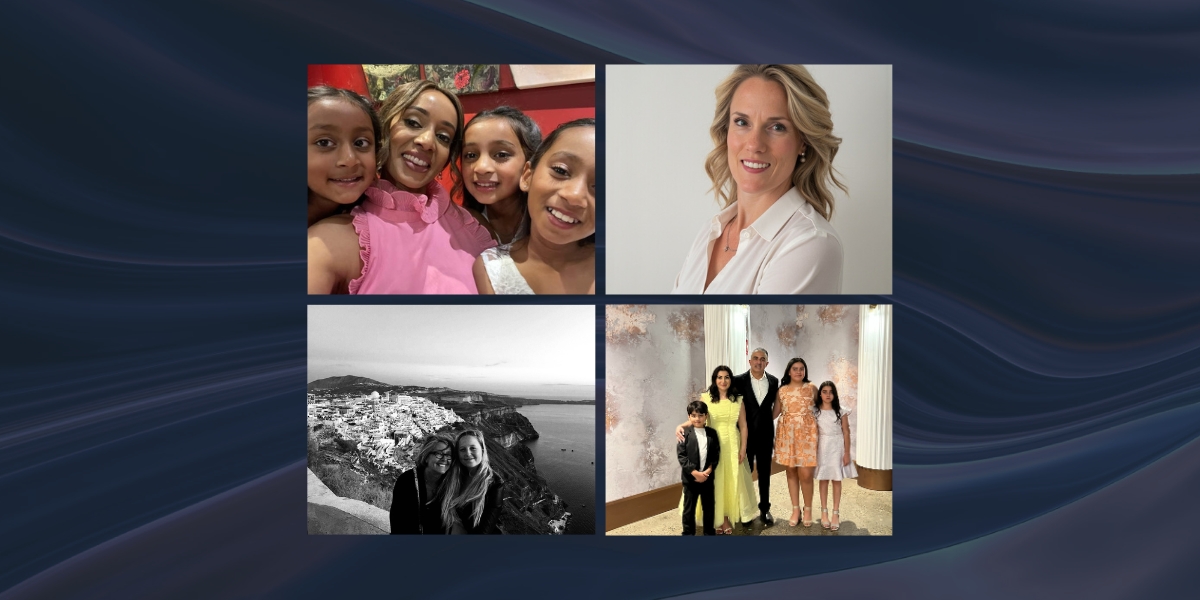

Doriena-Parsons-Mothers-Day.jpg

May 12, 2025 Women in Digital

Leading with Love

Redefining Motherhood, Mentorship, and Meaningful Impact

For many women, the word “mother” conjures images of family, warmth, and guidance. But for some, it’s more than a title, it’s a way of being. In this special Mother’s Day feature, we spoke with Doriena Parsons whose career has taken her across the globe and into boardrooms and blended families alike. She shares how women have shaped her journey, what she’s learned as a stepparent, and why redefining motherhood could be one of the most powerful ways to change how we lead.

Finding Power in Kindness and Ambition

Across a career spanning continents and sectors, Doriena has met many remarkable women. But the ones who made the most impact didn’t shout the loudest.

What stood out was their ability to lead with balance, strength, and integrity,” Doriena recalls. “Whether I was working in Europe, the Middle East or here in Australia, they showed up with calm, consistent leadership. They didn’t compromise their values to get ahead,they embodied them.

Growing up, ambition wasn’t something encouraged in girls. It was often laughed off or shut down. But an early-career mentor, a woman in leadership, shifted that narrative.

She told me something I’ve never forgotten: don’t let someone else judge the scale of your ambition, and when they do, don’t let it make you bitter. Stay fair. Stay open. Keep going.

It’s a philosophy that’s stayed with Doriena. One that reminds us that ambition doesn’t have to be loud to be powerful, and that kindness and strength are not opposites, but partners.

On Choosing a Different Path – and Still Showing Up Fully

Though Doriena chose not to have biological children, she became a stepparent to two daughters in a blended family, and that decision shaped not only her personal life but her leadership style.

I chose to focus on being a strong and stable presence for the girls,” Doriena shares.

It also meant I could channel energy into my career and eventually become the main breadwinner. It was a conscious choice, and not always one that others understood.

Some of the harshest judgments came from other women. But she stood firm in her belief: you don’t need to give birth to someone to love and support them like a parent.

As both a stepparent and mentor, she’s learned the power of presence and perspective. “I try never to tell people what to do. I offer my view and my experience. But I leave the choice to them. That kind of support, that respects autonomy, is essential in parenting and leadership.

Some of the hardest moments Doriena has experienced have come from the sidelines – watching someone you love make a painful choice you can’t protect them from. “But those are often the moments people grow the most. Your job is to stay steady, stay close, and let them figure it out. It never gets easier, but it’s necessary.

Mentorship as Modern Mothering

When asked about her role in supporting the next generation, she sees it as an act of reflection and belief.

Sometimes people just need someone to reflect their strength back to them. To say: I see what you’re capable of, even if you don’t yet.

Resilience is another core lesson Doriena tries to pass on. Life is messy, nonlinear, and imperfect. And that’s okay. “Setbacks are inevitable. But failure isn’t final. We need to build spaces where people can test ideas, try things, and feel safe getting it wrong. That’s how confidence is built – through belief, experience and freedom.

In a world that often values speed and perfection, Doriena advocates for something deeper: the courage to grow slowly, thoughtfully, and with purpose.

Redefining Motherhood in Leadership

To her, the word “mother” isn’t limited to biology. It’s a verb, a mindset, a form of leadership.

In business, mothering can look like mentoring with patience. It can mean creating safe spaces for others to speak up, or advocating for someone when they’re not in the room.

But she’s quick to point out that we need to rethink the language around it.

For too long, mothering has been associated with softness, often undervalued in professional spaces. But mothering at its best is profoundly strong. It’s about holding space, building resilience, and helping others realise their potential.

It also means taking a stand. Saying no to toxic behaviour. Refusing to play into behind-the-scenes commentary that tears others down. “If we say we value transparency, we have to live it – even when it’s uncomfortable. Leadership should reflect our values, not just our KPIs.

The One Piece of Advice She Hopes Young Women Take to Heart

Be confident in what you know… and humble about what you don’t.

Women are challenged more often, Doriena notes, and asked to prove themselves in ways their male peers are not. But confidence isn’t arrogance. And humility doesn’t mean self-doubt.

You don’t need to justify your choices to anyone. Just make sure they’re rooted in kindness, in integrity, and in your own truth. And don’t stop there. Seek out people who see the world differently from you. That’s where real growth happens.

This Mother’s Day: A Celebration of Quiet Confidence

For Doriena, confidence isn’t always loud. Sometimes, it’s steady. Sometimes, it’s deeply personal.

This Mother’s Day, I hope we can celebrate the women who lead with compassion and intention. The ones who uplift others quietly, the ones whose impact is felt more than seen.”

In her view, womanhood doesn’t need to fit a mould. Neither does leadership. “We have the power to shape our lives in ways that not only serve us, but make space for others to thrive too. That ripple effect? It matters. And it starts with how we choose to lead.


Mothers-Day-2025.jpg

May 12, 2025 Women in Digital

Lessons in Love, Leadership and Legacy

Mother’s Day has never been just about flowers and cards. It’s about the women. Mothers, grandmothers, aunties, stepmothers, chosen family, mentors, partners. All who show up, shape us, and stay with us long after we’ve left home. This year, we’re spotlighting real stories from our community to celebrate the resilience, wisdom, and influence of the women who’ve made us who we are.

We recently connected with some of our community members for an in-depth discussion about the women who have impacted their lives, and how that has shaped who they are today. 

Special thanks to our contributors:


Strength, Sacrifice, and the Unseen Load

We know many of the women in our lives carry an emotional and physical weight that often goes unspoken, but never unnoticed. That strength is what shapes the character of those around them.

Masseh remembered a defining moment from childhood:

“Mum was the only one who decided to stay put, rent a small place, and focus on giving us the best opportunities while sacrificing an awful lot along the way.”

Jaya, too, shared the depth of sacrifice that comes with parenting and leadership:

“Sometimes as a mum, you wear the burden of guilt — wanting to be everything to everyone. But over time I’ve learned it’s not about doing everything, but being present where it matters most.”

This invisible labour, emotional, mental, logistical, is often underappreciated, but it’s foundational to how communities and workplaces function. These reflections call for a deeper recognition of that contribution.

Leadership Beyond the Boardroom

The most influential leadership doesn’t always come from titles or authority – sometimes, it’s lived quietly at home. Grace reflected on her mum’s subtle yet powerful presence:

“My mum never tried to be the loudest in the room, but her voice always carried.”

This kind of grounded leadership, rooted in values and quiet consistency, shaped how these leaders now show up in their own roles. For Jaya, motherhood and executive leadership are inherently connected:

“As a parent, I’m always thinking about the legacy I’m building for my children. But as a leader, that thinking has helped shape how I build teams, lead change, and invest in people.”

The lesson? Leadership is not about hierarchy. It’s about responsibility, impact, and showing others what’s possible through your actions.

Redefining Motherhood, Family, and Care

Not all mothers are biological. And not all families are traditional. One key sentiment discussed with our community members was about redefining what motherhood and family mean, and how broadening that definition only adds more meaning.

Doriena offered a powerful reflection on step-parenting and mentorship:

“Motherhood isn’t just about biology — it’s about showing up, about being present, and about leading with kindness.”

Masseh echoed this sentiment through the lens of his upbringing, where his mother took on both parental roles:

“While my cultural heritage was rooted in a tradition where men led, it was my mum who stepped into the role of both mother and father.”

These stories show us that care, love, and leadership don’t follow a set path — and that family is defined by connection, not convention.

Legacy in Action

In the lead up to Mothers Day, our community members reflected on the values passed down by the women which have not only shaped their personal lives, but also their entire careers. They inform how these leaders make decisions, hold boundaries, and mentor others.

Grace, for instance, shared that her mum’s integrity continues to guide her daily:

“She lived by her values and that’s what made her a true leader in my eyes.”

For Masseh, the influence of his mother’s leadership is something he carries into every room:

“Not a day goes by where I compromise my choices or priorities. I carry her strength into every room I walk into.”

Jaya echoed this, explaining how her legacy as a mother and leader intertwines:

“I want my kids to look back and say, ‘My mum was strong, but she also cared deeply.’ That’s what I want for my team too.”

These stories remind us that values aren’t taught once, they’re modelled over time. And when passed down, they become powerful tools for generational and cultural change.

This Mother’s Day

Motherhood is leadership. It’s care. It’s resilience. It’s choosing to believe in someone before they believe in themselves. This Mother’s Day, we honour the women who raised us, inspired us, challenged us, and built futures through their everyday courage.

To every mother and maternal figure, thank you. We are better because of you.

Read each contributor’s full reflective article:


Alexa-Kane-Blog.jpg

May 1, 2025 Women in Digital

The Path to the C-Suite: Lessons from a Chief Customer Officer

For many tech professionals in customer-facing roles, the path to executive leadership isn’t always clear. Yet for Alexa Kane, Chief Customer Officer (CCO) at Felix, a decade-long career spanning customer support, onboarding, customer success, partnerships, and operations laid a strong foundation for her transition into the C-suite.

From Hands-On to Strategic Leadership

Alexa attributes her career growth to a willingness to take on challenges beyond her core responsibilities. Her early roles required her to work cross-functionally, providing insights into how different business units operate together. However, stepping into the C-Suite required a shift, learning to trust her team’s expertise rather than trying to be hands-on in every function. Moving from lean, high-attrition environments to executive leadership meant focusing on strategic objectives, resource planning, and business growth rather than day-to-day operations.

“Putting my hand up for different projects and learning beyond my immediate responsibilities was a game-changer,” she explains. “Working cross-functionally and understanding how different teams contribute to the bigger picture gave me a wider perspective that I still rely on today.”

A key learning experience came from being on the receiving end of SaaS solutions. As the decision-maker for customer tools, she gained valuable insights into onboarding, service transitions, and pain points… perspectives that now shape Felix’s customer experience strategy.

Challenges, Adaptation, and Leadership Growth

Joining Felix meant stepping into a new role and company where she would need to use her strong background in B2B SaaS to understand new industries and familiarise herself with the problems the Felix platform solved. And she would have to do it quickly! Rather than seeing this as a limitation, Alexa leveraged her experience in B2B SaaS and operational leadership. By analysing systems, processes, and growth opportunities, she found ways to contribute beyond the target industry knowledge.

Rather than trying to become the expert overnight, I leaned on the subject matter experts around me while focusing on what I knew best – optimising systems, processes, and team structures,” she says. This approach not only helped her transition successfully but also reinforced the importance of trusting and empowering her team.

Managing Imposter Syndrome and Non-Linear Career Steps

Alexa acknowledges that imposter syndrome is prevalent at all levels, particularly among women. She combats self-doubt by seeking feedback, reflecting on achievements, and challenging negative self-talk. 

“Negative self-talk is something I’ve had to actively work against. Recognising it and consciously shifting my mindset has helped me push through moments of uncertainty.”

She also emphasises the value of taking non-linear career steps, moving sideways or even backward at times to develop critical new skills. These decisions, while unconventional, ultimately accelerated her career.

Advice for Future Leaders

For those aspiring to executive leadership, Alexa’s advice is clear: embrace challenges outside your defined role, be proactive in optimising team performance, and balance efficiency with empathy. She stresses the importance of strategic time management, effective delegation, and adaptability, key traits that distinguish functional leadership from C-suite leadership.

    1. Step outside your comfort zone. Raise your hand for projects beyond your direct role. The experience you gain will accelerate your career faster than you think.
    2. Seek to learn from leaders in other departments. Ask questions and understand the functions, goals, priorities, ways of working and thinking from divisions such as Finance and Engineering. This will be a huge contributor to developing your wider business acumen.
    3. Balance data-driven decisions with people leadership. Efficiency and effectiveness are critical, but so is building a strong, engaged team. Don’t underestimate the impact of culture.
    4. Be strategic with career moves. A lateral or even backward step can sometimes be the smartest move for long-term growth. If it builds new skills, it’s worth it.
    5. Own your achievements. Women, in particular, need to get comfortable acknowledging their successes. Take credit for your contributions.

    Develop strong time management skills. The jump from team leadership to business function leadership requires a shift in prioritisation. Being ruthless with your time is essential.

A Journey of Adaptability and Impact

Reflecting on her career, Alexa is proud of her adaptability and openness to new opportunities. “I never had one rigid end goal. I let my career evolve naturally, and that’s what led me here.”

She also recognises the significance of her current role. “Being the first female executive at Felix and the first Chief Customer Officer advocating for customer experience at the executive level is something I’m incredibly proud of.

For those looking to follow a similar path, her message is clear: Leadership isn’t about knowing everything, it’s about learning, adapting, and trusting in the expertise of those around you.